English
 Español
 русский
 日本語
日本語
 عربى
عربى


Many people, when they first start magnet fishing, think that all they need to do is throw a magnet into the water. But after a few attempts, everyone will lament, "If only I had known these tips earlier!"
To save you from making the same mistakes, here are some "practical experiences" summarized by experienced players:
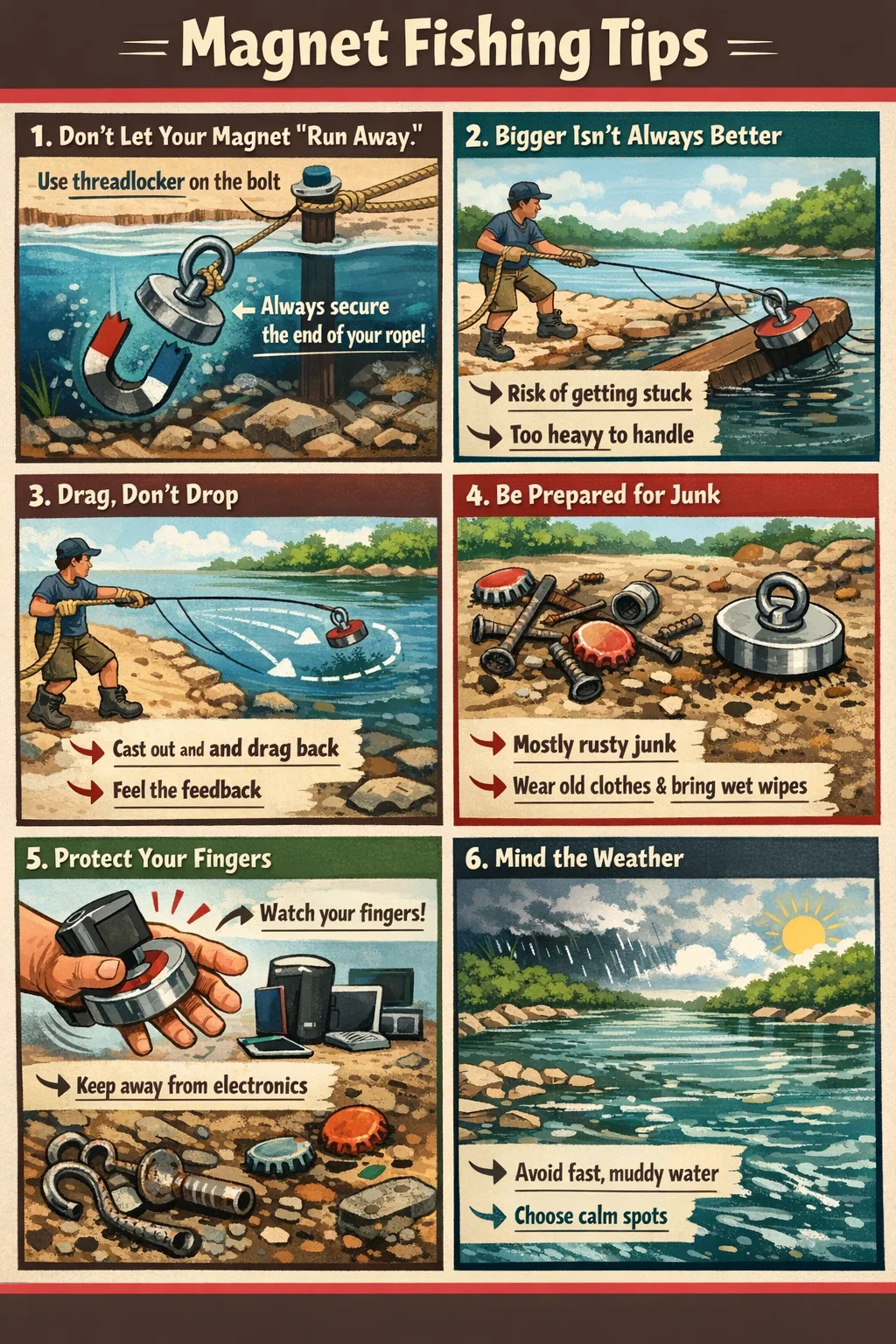
1. Don't let your magnet "run away"
This is the most painful lesson. Many people's fishing magnets end up permanently at the bottom of the water on their first outing.
Threadlocker is a lifesaver: The ring bolt on the magnet is particularly prone to loosening due to the constant movement in the water. Before you go, be sure to apply some strong glue to the threads and tighten it securely, otherwise, if the magnet falls into deep mud, you'll be crying with no way to retrieve it.
Secure the end of the rope: When throwing the magnet, the other end of the rope must be tied to your waist or a post on the shore. The embarrassing situation of throwing the entire rope into the river due to excessive force happens every day.
2. Bigger magnetic force isn't always better
Newcomers often pursue those magnets that can lift hundreds of pounds, but reality is harsh.
Risk of getting "stuck": If a fishing magnet with too much suction power gets tightly attached to a steel beam, large pipe, or bridge pier at the bottom of the water, it's impossible to pull it up with one person's strength. You'll ultimately have to cut the rope and reluctantly give up.
Weight burden: A magnet that's too heavy will tire your arms after only a few throws. Choose one that you can easily throw repeatedly so you can play longer.
3. "Dragging" is more effective than "straight dropping"
Many people drop the magnet straight down like fishing, but this is actually very inefficient.
Fan-shaped search: It's best to throw the magnet far out in a fan shape, and then slowly drag it back along the bottom of the water.
Feel the feedback: Magnet fishing relies on tactile sensation. The sudden sinking or "clinking" feedback when the magnet slides through the mud is the most exciting moment.
4. Be prepared to face "a pile of junk"
More often than not, your fishing magnet will pull up useless industrial waste.
Manage your expectations: Don't always expect to retrieve a safe. Most of the time you'll retrieve rusty nails, bottle caps, and rebar scraps.
Wet wipes and old clothes: The mud at the bottom of the water is particularly sticky and has a peculiar fishy smell. Wearing old clothes that you don't mind getting dirty and bringing some wet wipes to clean your hands will make your journey home much more comfortable.
5. Protect your fingers
Powerful magnets are not to be trifled with.
Spacing warning: When two fishing magnets get too close together, or when a magnet gets close to a metal pole, they will snap together so quickly that you won't have time to react. Never put your fingers in between; it's a very unpleasant experience.
Keep away from electronic devices: Keep your phone, car keys, and magnetic cards away from your large magnet to prevent magnetic interference from causing your devices to malfunction.
6. The influence of weather and water flow
Avoid going after rain: After heavy rain, the water flow is rapid and muddy, making it difficult for the magnet to sink to the bottom, and there are many weeds and debris that can easily get tangled.
Calm, deep water: Find a place with relatively calm water flow so that your fishing magnet can rest steadily on the riverbed for searching.