English
 Español
 русский
 日本語
日本語
 عربى
عربى


Content
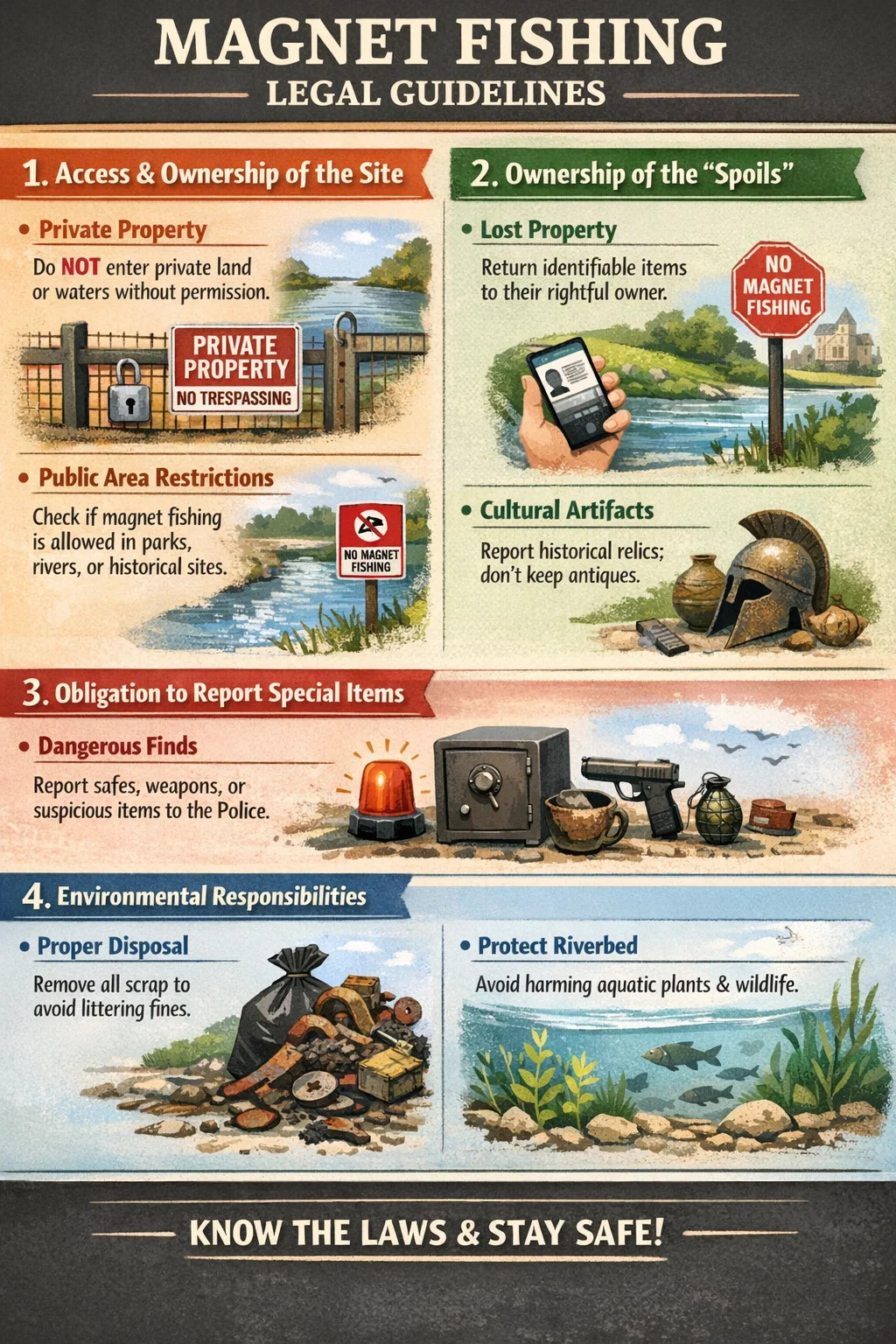
Before engaging in magnet fishing, it's crucial to understand the relevant laws and regulations. While this activity is considered a positive way to clean up the environment in many places, legally, it involves various aspects such as land rights, ownership of retrieved items, and public safety.
Here are some legal points to consider when engaging in this activity:
1. Access and Ownership of the Site
Private Property: You must never enter private land, docks, or ponds without permission. Even if you are standing on a public shore, if your fishing magnet is thrown into private waters, it may constitute trespassing.
Restrictions in Public Areas: Not all parks, rivers, or historical sites allow magnet fishing. Some places explicitly prohibit this activity to protect the riverbed ecosystem or historical artifacts.
2. Ownership of the "Spoils"
Unclaimed or Lost Property: Legally, items retrieved from the water don't always belong to whoever finds them. If the original owner can be identified through serial numbers or names, you may be required to return the item.
Cultural Heritage Protection: If you're lucky enough to retrieve a valuable antique with historical significance, in many regions, these are considered "national property." Illegally keeping them may violate cultural heritage protection laws.
3. Obligation to Report Special Items
Prohibited Items: If your fishing magnet retrieves a discarded safe, suspected crime tools, or dangerous items, you must not only refrain from keeping them but also report them to the police immediately.
Public Safety: In some areas with a specific historical background, dangerous metal remnants may be hidden at the bottom of the water. For safety and legal reasons, handling these items requires professional intervention.
4. Environmental Protection Responsibilities
Waste Disposal: One legal red line in magnet fishing is "littering." If you leave the rusty iron and mud you've retrieved on the shore instead of properly disposing of them, you may be fined for damaging the environment.
Damage to the Riverbed: In some nature reserves, frequently dragging large magnets across the riverbed may harm aquatic plants or fish spawning grounds, which is also prohibited under environmental laws.