English
 Español
 русский
 日本語
日本語
 عربى
عربى


Content
- 1 Can a Fishing Magnet Actually Remove a Security Tag?
- 2 How Security Tags Work: The Magnetic Lock Explained
- 3 What Is a Fishing Magnet and How Strong Is It?
- 4 Will a Fishing Magnet Work on Ink Security Tags?
- 5 The Legitimate Scenario: Security Tags Left On After Purchase
- 6 How to Use a Fishing Magnet to Remove a Security Tag Safely
- 7 Security Tags That a Fishing Magnet Cannot Remove
- 8 Dangers and Risks of Using a Fishing Magnet Near Security Tags
- 9 Other Methods That Work for Magnetic Security Tag Removal
- 10 Legal Considerations: When Is Removing a Security Tag Legal?
- 11 Summary: What a Fishing Magnet Can and Cannot Do to a Security Tag
Can a Fishing Magnet Actually Remove a Security Tag?
The short answer is: yes, a sufficiently powerful fishing magnet can remove certain types of security tags — but not all of them, and the details matter a lot. Most standard retail security tags use a magnetic locking mechanism inside. A strong enough external magnet can overcome that lock and release the pin. Fishing magnets, which are specifically designed for heavy-duty retrieval work, often carry pulling forces ranging from 200 lbs (roughly 90 kg) to over 1,000 lbs (450+ kg), which is more than enough to defeat the cheaper ink-free magnetic security tags found in mid-range retail stores.
However, there are several important distinctions to make. Not every security tag operates on a simple magnetic lock. Some tags use mechanical locks, others contain pressurized ink capsules, and high-end stores increasingly use electronic article surveillance (EAS) systems that are immune to magnetic interference. Understanding which type of tag you're dealing with — and what your magnet can realistically do — is the foundation of this entire topic.
How Security Tags Work: The Magnetic Lock Explained
To understand whether a fishing magnet can defeat a security tag, you first need to understand what's happening inside the tag itself. The most common type of retail security tag — used in clothing stores, sporting goods chains, and electronics retailers — operates on a simple magnetic pin-and-ball mechanism.
Inside the body of the tag, there is a steel ball or set of ball bearings held in place by a strong internal magnet. This ball locks the pin (which goes through the garment) into place. To release the pin legitimately, a retail detacher — which is a flat or cylindrical device with a very powerful magnet — is pressed against the tag. The external magnet temporarily overpowers the internal one, the ball shifts, and the pin slides out freely.
The internal magnets used in standard magnetic security tags are typically rated between 3,000 and 5,000 gauss. High-security tags used in luxury retail environments can use magnets rated at 10,000 to 15,000 gauss or more. A commercial detacher is usually rated around 12,000 gauss, which is why it works reliably across different tag types.
Common Security Tag Types Found in Retail
| Tag Type | Locking Mechanism | Vulnerable to Fishing Magnet? | Notes |
|---|---|---|---|
| Standard Magnetic Tag | Internal ball-and-pin magnet | Yes (with sufficient gauss) | Most common; found in mid-range retailers |
| Ink Dye Tag | Magnetic + pressurized ink | Technically yes, but risky | Improper removal triggers ink release |
| Mechanical Lock Tag | Physical ratchet mechanism | No | Not affected by magnetic force |
| EAS Hard Tag | Electronic + magnetic combo | Partially | Magnet may release pin but EAS alarm still active |
| Spider Wrap / Cable Tag | Mechanical cable with alarm | No | Magnets have no effect on cable locks |
What Is a Fishing Magnet and How Strong Is It?
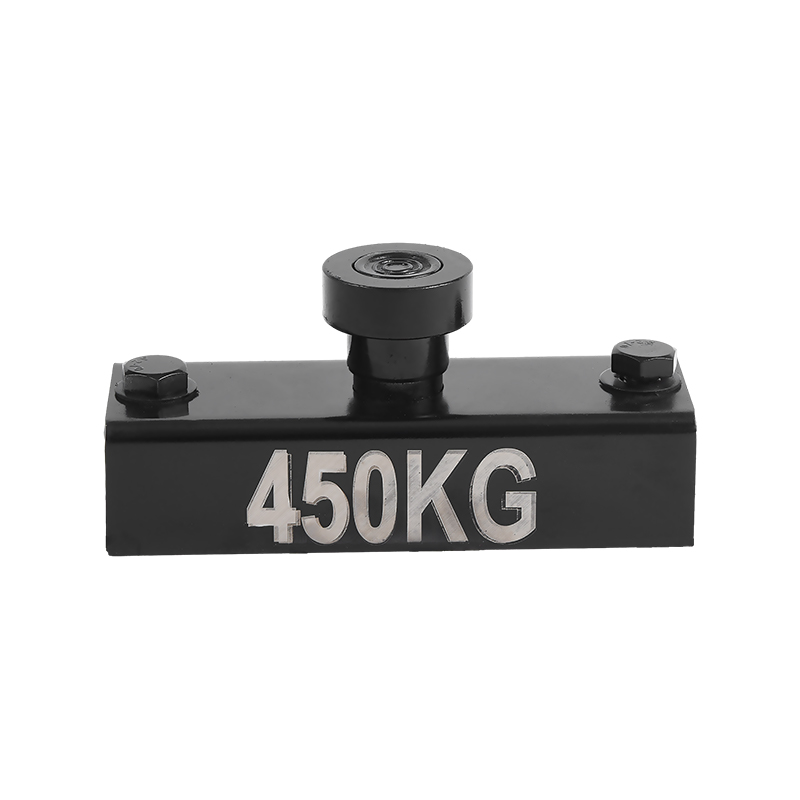
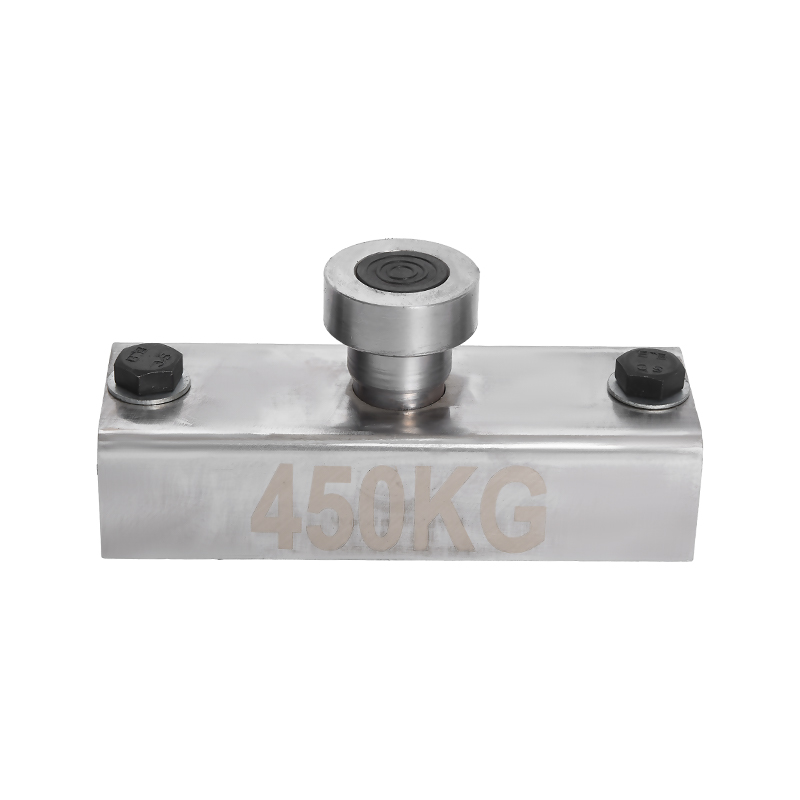
A fishing magnet — also called a retrieval magnet or magnet fishing magnet — is a neodymium rare-earth magnet engineered to be submerged in water and drag heavy ferromagnetic objects off the bottom of lakes, rivers, and canals. These are not your ordinary fridge magnets or even typical workshop magnets. Neodymium magnets (NdFeB) are among the strongest permanent magnets available to consumers, and fishing variants are specifically built into steel pot casings to focus and amplify their pulling force in one direction.
Entry-level fishing magnets for beginners typically carry a pulling force of around 200 to 300 lbs (90–136 kg). Mid-range models used by hobbyists sit between 400 and 600 lbs (180–272 kg). Heavy-duty double-sided fishing magnets aimed at experienced users can pull 800 lbs to over 1,200 lbs (360–544 kg). In terms of magnetic field strength, these magnets commonly reach surface field strengths of 3,000 to 6,000 gauss or higher at the contact face.
Fishing Magnet Strength vs. Security Tag Detacher Requirements
| Magnet Type | Approximate Pulling Force | Estimated Surface Gauss | Likely to Remove Standard Tag? |
|---|---|---|---|
| Retail Detacher (commercial) | N/A (fixed device) | ~12,000 gauss | Yes — designed for this purpose |
| Entry-Level Fishing Magnet | 200–300 lbs | ~3,000–4,000 gauss | Sometimes — depends on tag brand |
| Mid-Range Fishing Magnet | 400–600 lbs | ~5,000–7,000 gauss | Yes — for most standard magnetic tags |
| Heavy-Duty Fishing Magnet | 800–1,200+ lbs | ~8,000–12,000+ gauss | Yes — including many high-security tags |
One critical variable is that fishing magnets are pot magnets — the steel casing directs most of the magnetic flux through the flat face of the magnet. This focused field is exactly what you need to mimic the action of a retail detacher. The geometry is actually favorable for overcoming a security tag's internal lock when the magnet is pressed directly against the tag body.
Will a Fishing Magnet Work on Ink Security Tags?
This is where caution becomes critical. Ink dye tags — the type with a small vial of colored ink inside the casing — use the same magnetic locking mechanism as standard tags. So yes, a strong fishing magnet can technically release the pin on an ink dye security tag. The problem is not the magnetic unlocking itself; it is what happens when the tag is mishandled after the pin is loosened.
Ink tags are designed with a secondary security measure: the ink capsule is pressurized and positioned so that forceful or incorrect removal of the pin — or physical distortion of the tag body — ruptures the vial and sprays ink across the garment. The ink used in these tags is specifically formulated to be permanent and resistant to standard cleaning methods. Common colors include red, blue, and black, and the stains are intentionally engineered to ruin the item.
Even if the fishing magnet successfully releases the magnetic lock inside an ink tag, withdrawing the pin at the wrong angle, with too much force, or too quickly can still trigger the ink. The safest approach with any ink tag is always to go back to the retailer if the tag was accidentally left on after purchase.
How to Recognize an Ink Tag Before Attempting Removal
- The tag body is typically circular, about 1.5 to 2 inches in diameter, and somewhat thick.
- You can often see colored vials or liquid through a translucent or semi-transparent section of the casing.
- The tag feels heavier than a basic hard tag of similar size.
- Some ink tags have "INK" printed directly on the casing as a warning.
- Brands like Alpha Security and Checkpoint commonly manufacture ink-equipped tags used across fashion retail chains.
The Legitimate Scenario: Security Tags Left On After Purchase
The overwhelming majority of people researching this topic have a completely legitimate reason: they got home and discovered the store employee forgot to remove the security tag at checkout. This is more common than retailers would like to admit. According to anecdotal reports across consumer forums, roughly 1 in every 200 to 500 retail transactions results in a tag being left on an item — a small rate, but it adds up to tens of thousands of incidents per day across large retail chains.
The standard and correct resolution is straightforward: return to the store with your receipt. Any reputable retailer will remove the tag immediately, often apologizing for the inconvenience. Many stores will even mail you a prepaid label to send the item back if you live far away, or in some cases, they will issue a refund and let you keep the item. This is always the recommended first step.
If returning to the store is genuinely not possible — for instance, if you purchased the item while traveling, the store has closed permanently, or the tag is on a time-sensitive item like a costume needed for that evening — then exploring magnetic removal methods becomes a more reasonable consideration.
How to Use a Fishing Magnet to Remove a Security Tag Safely
If you have confirmed the tag is a standard magnetic security tag (no ink, no electronic alarm function), have your receipt, and have a legitimate reason to remove it without returning to the store, here is how the process works in practice.
Step-by-Step Process for Magnetic Tag Removal
- Identify the tag type first. Look for ink vials, electronic components, or cable attachments. If any are present, stop and reconsider.
- Place the tag on a flat, stable surface with the dome (the rounded top portion) facing down. The pin side should face up.
- Press the flat face of the fishing magnet firmly against the dome portion of the tag body. The dome is the side that contains the internal locking ball mechanism.
- Hold the magnet in place with steady, even pressure. You should feel the internal components shift slightly — this is the ball bearing moving away from the locking position.
- Gently and slowly pull the pin straight out with your other hand. Do not twist or yank. A slow, straight pull is key to a clean release.
- If the pin does not release, reposition the magnet slightly — try rotating it or moving it to a different area of the dome surface. Different tag models have slightly different internal geometries.
The whole process, when done correctly, takes under 30 seconds. The tag will not be damaged (unless force is applied incorrectly), and the garment will be unharmed. Many people who work in fashion retail have confirmed this method works consistently on the standard Sensormatic and similar magnetic hard tags that dominate mid-market retail.
Key Mistakes to Avoid
- Do not place the magnet on the pin side — the locking mechanism is in the body/dome, not around the pin itself.
- Do not twist or rotate the pin during extraction — this can trigger ink release in combo tags or bend the pin.
- Do not use a weak magnet and then assume force will compensate — if the magnetic field is insufficient to release the ball, physical force will damage the tag, the garment, or both.
- Do not rush the process — slow, controlled pressure is far more effective than a quick grab.
- Keep the fishing magnet away from credit cards, smartphones, mechanical watches, and other electronic devices during use — at 400+ lbs pull force, these magnets will destroy magnetic stripes and interfere with electronics within several inches.
Security Tags That a Fishing Magnet Cannot Remove
It is just as important to know the limits of what a fishing magnet can do as it is to know its capabilities. Several tag types are entirely immune to magnetic manipulation.
Mechanical Ratchet Tags
Some security tags use a purely mechanical locking mechanism — a ratchet or spring-loaded clip that requires a specific physical key or detacher tool that mechanically releases the lock rather than magnetically. These tags have no internal ball-bearing magnet. No amount of magnetic force will release them because there is no magnetic component to affect. A fishing magnet pressed against one of these tags will stick to it due to the steel casing, but will not release the pin.
Spider Wraps and Cable-Based Security Systems
Spider wraps are cable-based security systems that wrap around an item (a box, a bag, a piece of electronics) and connect to a central alarm unit. The locking mechanism in the central unit may or may not be magnetic, but the cables themselves are steel-reinforced and cannot be pulled free with magnet force. Even if the central unit's magnetic lock were released, the cables would still need to be physically unwrapped. These systems are common in electronics and high-value goods retail.
High-Security Magnetic Tags (Super Magnetic / Alpha Keys)
Luxury retailers and high-theft categories like premium denim, outerwear, and high-end electronics use tags with dramatically stronger internal magnets. The Alpha Security S3 system, for instance, uses an internal locking magnet rated significantly above standard tags, requiring a specialized key detacher that outputs a very specific and powerful field geometry. While a heavy-duty fishing magnet with 1,000+ lbs pull force might eventually overpower even these tags, the threshold becomes impractical for most consumer-grade fishing magnets.
RFID and EAS Tags on Labels
Soft labels — those thin paper or plastic stickers applied directly to product packaging or sewn into garment liners — use RFID or acousto-magnetic (AM) / radio-frequency (RF) technology. These have no mechanical pin to remove and no magnetic lock to defeat. A fishing magnet does absolutely nothing to these labels. They require deactivation at the checkout scanner or physical destruction of the internal antenna/chip to disable.
Dangers and Risks of Using a Fishing Magnet Near Security Tags
Fishing magnets are serious tools that demand serious respect. The same properties that make them effective at retrieving sunken metal from waterways make them genuinely hazardous in indoor, close-contact situations.
Pinching and Crushing Injuries
A 500 lb pull force fishing magnet that snaps onto a steel surface will trap anything between it and that surface — including fingers — with bone-crushing force. These injuries are well-documented in the magnet fishing community. Never allow fingers or skin between a fishing magnet and any ferromagnetic surface. Always approach the tag placement from the side, never from above with your hand between the magnet and the item.
Damage to Electronic Devices
The magnetic field of a high-powered fishing magnet extends several inches in all directions from the contact face. Hard drives, credit cards with magnetic stripes, hotel key cards, transit passes, hearing aids, pacemakers, and older mechanical watches can all be damaged or destroyed by proximity to these magnets. Clear the area of all sensitive items before use and keep the magnet at least 12 inches away from anything electronic.
Ink Tag Rupture Risk
As covered earlier, misidentifying an ink dye tag as a standard magnetic tag and proceeding with magnetic removal is the most likely way to end up with a ruined piece of clothing. The ink used in retail security tags is engineered to be indelible. Common ink tag brands include Checkpoint and Sensormatic — both of which produce both standard and ink-filled variants that look nearly identical from the outside unless you examine them closely.
Other Methods That Work for Magnetic Security Tag Removal
If you do not have a fishing magnet on hand, there are other approaches that operate on the same magnetic principle. The core requirement is always the same: you need a magnet strong enough to overcome the internal locking ball, pressed against the dome side of the tag.
Neodymium Disc Magnets
Neodymium disc magnets (N52 grade or higher) in larger sizes — typically 2 inches or more in diameter — can develop sufficient surface gauss to release standard security tags. These are sold individually online for around $10 to $30 and are much more compact and manageable than a full fishing magnet. The trade-off is that they may not have enough force for high-security tags, and they carry the same finger-pinching risks as their larger cousins.
Commercial Detachers (Available for Purchase)
Retail detachers — the flat pad or cylindrical device used at store checkouts — are available for purchase online. They are rated to around 12,000 gauss and will reliably release virtually all standard magnetic security tags. Prices range from $15 for basic flat detachers to $60 or more for premium handheld versions. For someone who frequently encounters forgotten tags, owning a commercial detacher is the most practical and elegant long-term solution.
Rubber Band Method (for Non-Ink Tags Only)
A non-magnetic method sometimes discussed online involves wrapping a rubber band tightly around the pin of the tag repeatedly to create tension, then using that tension to pry the pin mechanism open. This works inconsistently at best and carries a high risk of damaging both the tag and the garment. It is not recommended as a primary method, but it is worth knowing it exists as a last resort for non-ink standard tags when no magnet is available.
Legal Considerations: When Is Removing a Security Tag Legal?
The legality of removing a security tag depends entirely on context. Removing a security tag from an item you have legally purchased is not illegal. Once you have paid for merchandise, the property is yours, and you are free to remove any hardware attached to it. The security tag is a retailer's tool, not a legal restriction on your ownership.
Removing or tampering with a security tag on merchandise you have not purchased — or with the intent to steal — is a different matter entirely. In the United States, possessing tools specifically designed to remove retail security tags without authorization can be considered possession of burglary tools in several states. Similar provisions exist in the UK, Australia, and across the EU. The tools themselves (including fishing magnets) are legal for their intended use; the criminal element comes from intent and context.
If you are removing a tag from a legitimately purchased item, keep your receipt accessible. If questioned, a receipt is clear proof of ownership and eliminates any ambiguity about your intent.
Summary: What a Fishing Magnet Can and Cannot Do to a Security Tag
- Can remove: Standard magnetic hard tags (ball-and-pin mechanism) found in most mid-range clothing and general merchandise retailers, when a mid-range to heavy-duty fishing magnet is used correctly.
- Can sometimes remove: Ink dye tags — the magnetic lock can be released, but ink rupture risk during pin withdrawal is significant and must be carefully managed.
- Cannot remove: Mechanical-only tags, spider wraps, cable-based security systems, RFID/EAS soft labels, and very high-security magnetic tags designed for luxury retail.
- Key requirement: The magnet must be applied to the dome side (not the pin side) with firm, steady pressure. The pin must be withdrawn slowly and straight.
- Best practice: Always return to the retailer first. Use a fishing magnet or neodymium disc magnet only as a legitimate secondary option when returning is not feasible, and only after positively identifying the tag as a standard magnetic type.
- Safety reminder: Keep all electronics, cards, and fingers clear of the magnet's working area. A 500 lb fishing magnet is not a casual household tool.