English
 Español
 русский
 日本語
日本語
 عربى
عربى


Content
- 1 Is Magnet Fishing Worth It? The Short Answer First
- 2 What People Actually Find With a Fishing Magnet
- 3 How Much Does a Fishing Magnet Cost — And What Do You Actually Need
- 4 Best Locations for Magnet Fishing and Why They Matter
- 5 The Legal Side of Magnet Fishing You Need to Know
- 6 Magnet Fishing as Environmental Cleanup — A Genuine Benefit
- 7 Safety Precautions That Are Non-Negotiable
- 8 Magnet Fishing vs. Metal Detecting — Which Is Right for You
- 9 How to Get Started With Magnet Fishing — A Practical First-Trip Checklist
- 10 The Realistic ROI of Magnet Fishing — Time, Finds, and Satisfaction
Is Magnet Fishing Worth It? The Short Answer First
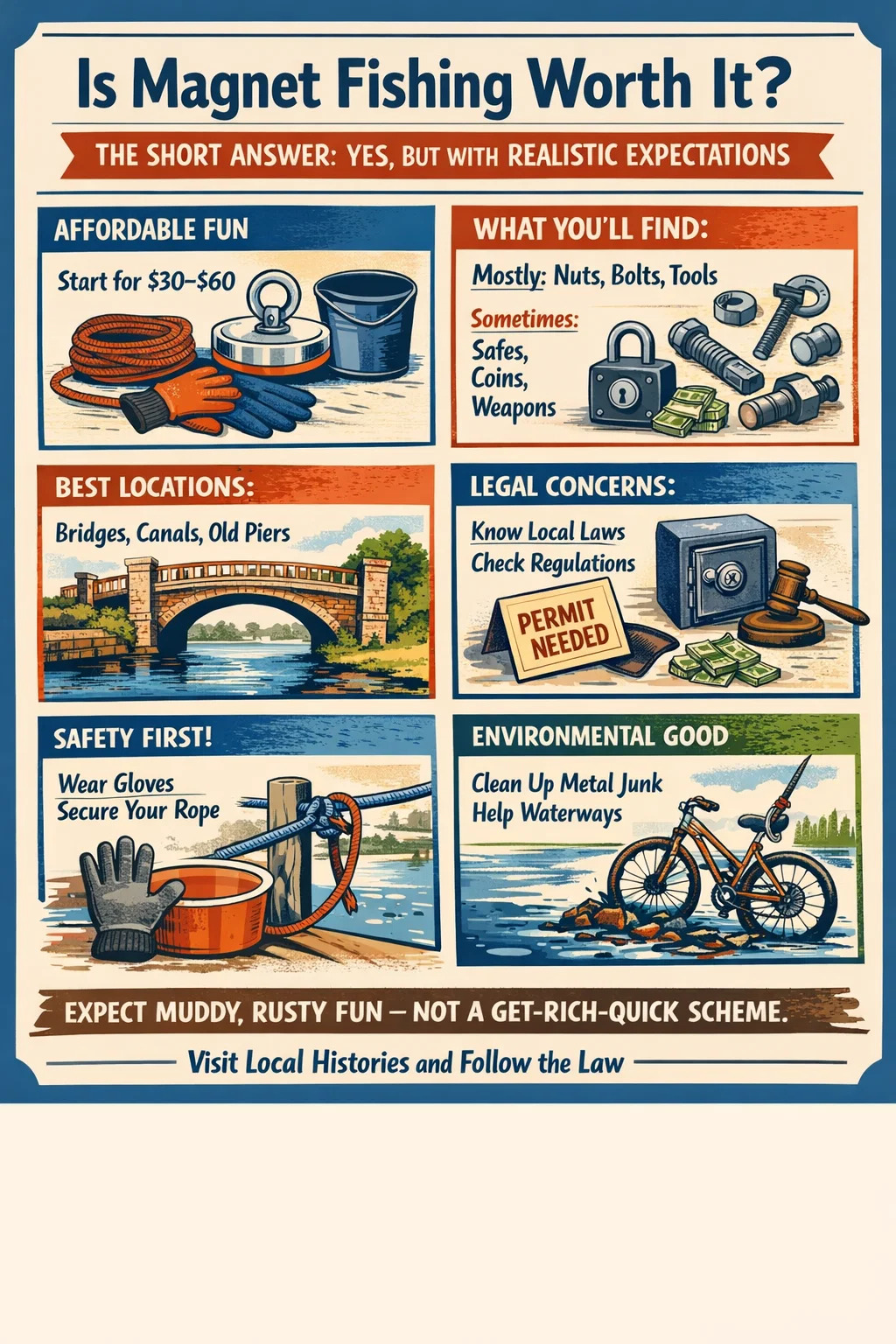
Yes, magnet fishing is worth it for most people — but only if you go in with realistic expectations. It is an affordable outdoor hobby that combines physical activity, treasure hunting, and environmental cleanup. You are not guaranteed to pull up Civil War swords or stacks of cash, but you will almost certainly find interesting metal objects, and many hobbyists report that the process itself is addictive regardless of what they haul up.
The entry cost is low. A decent starter fishing magnet and rope costs between $30 and $60, and after that the hobby is essentially free. Compare that to golf, kayaking, or metal detecting with a quality detector — all of which can run hundreds of dollars before you even start. You can fish from bridges, riverbanks, canal paths, and harbors with nothing more than a magnet, a rope, and a pair of gloves.
That said, it is not for everyone. If you expect fast results, significant monetary rewards, or guaranteed exciting finds every outing, you will be disappointed. But if you enjoy the outdoors, do not mind some mud and rust, and like the idea of not knowing what is coming up next, magnet fishing delivers consistently.
What People Actually Find With a Fishing Magnet
The range of objects people recover is surprisingly wide. Most finds are mundane — bolts, brackets, scrap steel, old bicycle frames, shopping cart parts — but that is part of what makes the occasional rare find feel genuinely exciting. Here is a realistic breakdown of common and uncommon recoveries:
Common Finds (Most Sessions)
- Nuts, bolts, and miscellaneous fasteners
- Old padlocks and chains
- Fishing weights, hooks, and lures with steel components
- Knives and scissors
- Bicycle parts and wire
- Steel pipes and rebar sections
- Old tools — hammers, wrenches, pliers
Less Common but Realistic Finds
- Cash boxes and safes (sometimes with contents)
- Military dog tags or belt buckles
- Old coins (steel-core or iron varieties)
- Firearms and weapons (requires immediate police reporting in most jurisdictions)
- Antique signs and metal plaques
- Car parts and anchors near docks
Documented notable finds have included a World War II grenade pulled from a river in the UK, a loaded safe containing over $1,000 in cash found in a Minnesota lake, and multiple antique swords recovered from canals in England. These are not everyday occurrences, but they happen often enough that the magnet fishing community documents them regularly on YouTube and Reddit.
Note that a fishing magnet only attracts ferromagnetic metals — primarily iron and steel. Gold, silver, aluminum, copper, and brass will not stick. If you are hoping to find gold rings or silver coins, a standard neodymium fishing magnet will not help you there. Some people use underwater metal detectors alongside their magnet to cover both bases.
How Much Does a Fishing Magnet Cost — And What Do You Actually Need
One of the biggest reasons magnet fishing is worth it financially is the low cost of entry. Unlike many outdoor hobbies, you do not need ongoing consumables, licenses in most places, or expensive equipment upgrades. Here is what a realistic setup costs:
| Item | Budget Option | Mid-Range Option | Premium Option |
|---|---|---|---|
| Fishing Magnet (single-sided) | $15–$25 | $35–$60 | $80–$150+ |
| Rope (20–30m braided nylon) | $10–$15 | $20–$30 | $40–$60 |
| Gloves (cut-resistant) | $8–$12 | $15–$25 | $30–$50 |
| Grappling Hook (optional) | — | $15–$25 | $30–$50 |
| Bucket and Scraper | $5–$10 | $10–$15 | $15–$20 |
A complete beginner kit — magnet, rope, gloves, and a bucket — can be put together for under $50. That is the full investment. There are no monthly fees, no bait costs, and no licenses required in most US states for purely recreational magnet fishing from public land.
Choosing the Right Fishing Magnet Strength
Magnet strength is measured in pulling force (pounds or kilograms). Beginners often buy a magnet that is either too weak or, more commonly, so strong that handling becomes genuinely dangerous. Here are general guidelines:
- 200–500 lbs pull force: Good for beginners. Manageable to handle, still picks up most common finds.
- 500–1,000 lbs pull force: Intermediate range. Can recover heavier items but requires more caution around steel structures.
- 1,000+ lbs pull force: Advanced use only. These magnets can crush fingers and become dangerous near bridges, iron railings, or vehicles.
A double-sided neodymium fishing magnet in the 500 lb range is what most experienced hobbyists recommend as the sweet spot for general use. Double-sided magnets attract objects from both faces, significantly increasing coverage on each throw.
Best Locations for Magnet Fishing and Why They Matter
Location makes more difference than magnet strength. The most expensive fishing magnet in the world will produce nothing in a river that has never seen human activity. Conversely, a modest 300 lb magnet thrown under an old bridge in a historic town can produce extraordinary results. Here is how to think about location selection:
High-Yield Location Types
- Old bridges: Items fall off bridges constantly — tools dropped by workers, objects thrown in disputes, things lost from boats. The older the bridge, the more history is concentrated beneath it.
- Historic canals: In the UK especially, canals that were heavily used during the Industrial Revolution have accumulated enormous quantities of metal. Canal towpaths are also public land in many areas, making access easy.
- Swimming holes and recreational areas: People lose keys, jewelry (non-magnetic, unfortunately), belt buckles, and metal accessories. Fishing weights and hooks accumulate here too.
- Under fishing piers: Decades of dropped tackle, broken gear, and lost tools sit on the bottom.
- Areas near old mills or factories: Industrial waterways often have significant metal accumulation from operations that ran decades or centuries ago.
- Near boat launch ramps: Trailer pins, tools, and equipment fall off boats at launch. This area sees consistent new deposits.
Locations to Avoid or Research First
- Private property waterways without landowner permission
- National parks and protected waterways (often prohibited)
- Active shipping channels or harbors (safety and legal issues)
- Rivers adjacent to military installations
Research the history of any location before you go. Local historical societies, old maps, and genealogy forums often have records of bridges, mills, and factories that no longer exist on the surface but have left metal deposits in the water below. A bit of preparation can turn a mediocre trip into a genuinely productive one.
The Legal Side of Magnet Fishing You Need to Know
This is the part most beginners overlook, and it is arguably the most important section of this guide. The legality of magnet fishing varies significantly by country, state, and even municipality. Getting it wrong can result in fines, confiscation of your gear, or in rare cases, arrest.
United States
There is no federal law in the US that specifically prohibits magnet fishing. However, several states have begun introducing regulations. South Carolina passed legislation in 2021 requiring magnet fishers to obtain a free permit and to report finds of historical or archaeological significance. Other states may follow. Always check local ordinances and get permission from landowners when fishing from private banks or piers. On federal lands managed by the Army Corps of Engineers or the National Park Service, you typically need prior written permission.
United Kingdom
The UK has some of the most developed regulations. The Canal and River Trust, which manages most navigable waterways in England and Wales, requires a free permit for magnet fishing on its waterways. You can apply online in minutes. Fishing from canal towpaths without a permit is technically trespassing. In Scotland, different rules apply under the Land Reform Act. Any find that could be classified as treasure under the Treasure Act 1996 — generally objects over 300 years old containing precious metals — must be reported to the local coroner within 14 days. Failure to do so is a criminal offense.
What to Do If You Find a Weapon
This situation arises more often than people expect. Firearms are among the more common significant finds in rivers near urban areas, as criminals dispose of weapons this way. The correct procedure in virtually every jurisdiction is to not touch or move the weapon further, call local police, and wait. Do not take it home, do not clean it, and do not post about it on social media before the police arrive. The same applies to anything that resembles an explosive device — grenades, mortars, and unexploded ordnance from old conflicts do turn up in rivers, particularly in Europe.
Magnet Fishing as Environmental Cleanup — A Genuine Benefit
One reason magnet fishing has grown a genuinely positive reputation — even among people who initially dismissed it as littering with steps — is its environmental cleanup aspect. Rivers, canals, and lakes accumulate metal debris constantly. Bicycles, shopping carts, fencing, scaffolding — these items leach rust and in some cases toxic coatings into water systems over years and decades.
Organized magnet fishing cleanup events have demonstrated the scale of what gets removed. A single cleanup event in Amsterdam in 2020 pulled over 2,000 bicycles from the city's canals using a combination of magnets and grappling hooks. The UK Canal and River Trust has formally partnered with magnet fishing groups to assist with waterway cleanup programs. These are not fringe activities — they produce measurable environmental improvements.
For individual hobbyists, removing metal junk from a waterway provides a concrete sense of contribution. Many participants report that this aspect of the hobby — cleaning up while exploring — is a primary reason they keep going out regularly even when finds are unremarkable.
Safety Precautions That Are Non-Negotiable
Magnet fishing is not a dangerous hobby in the traditional sense, but there are real hazards that beginners tend to underestimate. The most common injuries are cuts from rusted metal edges and finger crush injuries from high-pull-force magnets snapping onto steel surfaces unexpectedly.
- Always wear cut-resistant gloves. Rusted metal is unpredictable. Edges that look dull can cut deeply when under tension. Tetanus shots should be up to date for anyone handling recovered scrap regularly.
- Use a reliable knot. The palomar knot or a double fisherman's knot are recommended for attaching rope to the magnet eyebolt. A knot failure while pulling up a heavy object can send you backward or drop your magnet permanently.
- Keep the magnet away from electronics. A strong neodymium fishing magnet can damage credit cards, phones, watches, and medical devices like pacemakers within a few feet. Keep it in a dedicated bag or plastic container when not in use.
- Never fish alone near water if you cannot swim strongly. Leaning over a bridge or canal edge while pulling heavy weight creates real fall risk. Fish with a partner when possible.
- Secure your rope before throwing. Wrap the free end around your wrist or tie it to a fixed object. Losing an entire magnet and rope setup in deep water is an expensive and frustrating mistake.
- Dispose of finds responsibly. Most recovered metal should go to a scrap metal recycler. Do not leave it piled on the bank. Many municipalities have free metal collection services or scrap yards that will take it.
Magnet Fishing vs. Metal Detecting — Which Is Right for You
Both hobbies involve searching for hidden objects, but they are quite different in practice. Knowing the distinction helps you decide whether magnet fishing alone is worth it for your goals, or whether you might want to consider combining the two.
| Factor | Magnet Fishing | Metal Detecting |
|---|---|---|
| Startup Cost | $30–$60 | $200–$800+ |
| Metals Detected | Ferromagnetic only (iron/steel) | All metals including gold, silver, aluminum |
| Environment | Waterways primarily | Fields, beaches, parks, land |
| Physical Activity | Moderate (pulling, lifting) | Low-moderate (walking, digging) |
| Permit Requirements | Varies (low in most US states) | Often required for historic land |
| Find Sizes | Small to very large | Small to medium primarily |
| Social / Community | Growing online community | Large, well-established community |
For people on a tight budget who enjoy the outdoors and water environments, magnet fishing wins outright on cost and accessibility. For those interested specifically in coins, jewelry, or buried artifacts, a quality metal detector opens up more possibilities. Many serious hobbyists eventually do both.
How to Get Started With Magnet Fishing — A Practical First-Trip Checklist
If you have decided it is worth trying, here is what a sensible first outing looks like from start to finish.
Before You Go
- Research your local laws. Check if your state or municipality has any specific regulations and whether you need a permit for the waterway you plan to visit.
- Identify a location with human history — an old bridge, a fishing pier, or a canal that saw commercial traffic. Use Google Maps in satellite view to scout spots from home.
- Assemble your kit: fishing magnet (300–500 lb pull recommended for beginners), 20m+ of braided nylon rope rated well above your magnet's pull force, cut-resistant gloves, a bucket, and a scraper for removing finds from the magnet.
- Check the weather. Wet surfaces near water edges increase fall risk significantly.
At the Location
- Tie your rope to the magnet eyebolt using a palomar or double fisherman's knot. Test it by pulling hard before your first throw.
- Secure the free end of the rope before throwing. Wrap it around your arm or tie it off to a railing.
- Throw outward, not downward. Let the magnet sink and drag it slowly back along the bottom. Vary the angle of your throws to cover a wider area.
- When you feel resistance, pull slowly and steadily. Jerking the rope can dislodge objects before they reach the surface.
- Use the scraper to remove finds from the magnet rather than pulling them off by hand.
- Place all finds in your bucket. Do not leave debris on the bank — take everything out with you for proper disposal.
After the Trip
- Sort your finds. Anything potentially valuable or historically significant should be set aside and researched before being discarded or sold.
- Rinse your magnet and rope to prevent accelerated rust on the eyebolt and rope degradation from river sediment.
- Take scrap metal to a recycler. Many scrap yards will take small quantities for free, and larger loads may earn a small payment — typically $0.05–$0.10 per pound for steel depending on current commodity prices.
- Document interesting finds with photos. The magnet fishing community on Reddit (r/magnetfishing) and YouTube is active and generally helpful for identifying unusual objects.
The Realistic ROI of Magnet Fishing — Time, Finds, and Satisfaction
People sometimes ask whether magnet fishing can pay for itself or even generate income. The answer is: occasionally, but that should not be your primary motivation. Here is a realistic breakdown of what to expect over time:
- Scrap metal value: A typical outing might yield 5–20 lbs of steel scrap. At $0.05–$0.10/lb, that is $0.25–$2.00. Not meaningful income, but some people accumulate finds over multiple trips and make a single scrap run worth $10–$20.
- Resaleable finds: Tools, padlocks, knives, and old hardware can sometimes be cleaned and sold on eBay or at flea markets. Some hobbyists report recovering $20–$50 worth of resaleable items per month across multiple trips.
- Exceptional finds: Safes with cash, antique weapons, historically significant objects — these are rare but real. They cannot be budgeted for, but they happen.
- YouTube and content creation: Some magnet fishers have built significant YouTube followings documenting their finds. Channels with consistent posting and good finds can generate advertising revenue, though this requires genuine commitment to content creation on top of the hobby itself.
The more honest answer is that most participants do not approach it as a money-making exercise and do not need to. The primary return is the experience itself — time outdoors, the genuine thrill of not knowing what comes up next, and the satisfaction of cleaning up a waterway in the process. On those terms, a $40–$60 investment that delivers months or years of weekend outings is an exceptional value compared to almost any other hobby at that price point.