English
 Español
 русский
 日本語
日本語
 عربى
عربى


Content
- 1 What Magnetic Fishing Kits Actually Include — and Why It Matters
- 2 The Fishing Magnet: The Component Everything Else Depends On
- 3 Rope, Carabiner, and Knot — The Components People Underestimate
- 4 Kit Tiers Explained: Budget, Mid-Range, and Professional
- 5 Safety: What the Instruction Manuals Don't Tell You
- 6 Technique: How to Actually Fish Effectively with a Magnet Kit
- 7 Legal Considerations Before You Drop a Fishing Magnet in the Water
- 8 Maintenance and Long-Term Care for Your Kit
- 9 Choosing the Right Kit for Your Specific Situation
What Magnetic Fishing Kits Actually Include — and Why It Matters
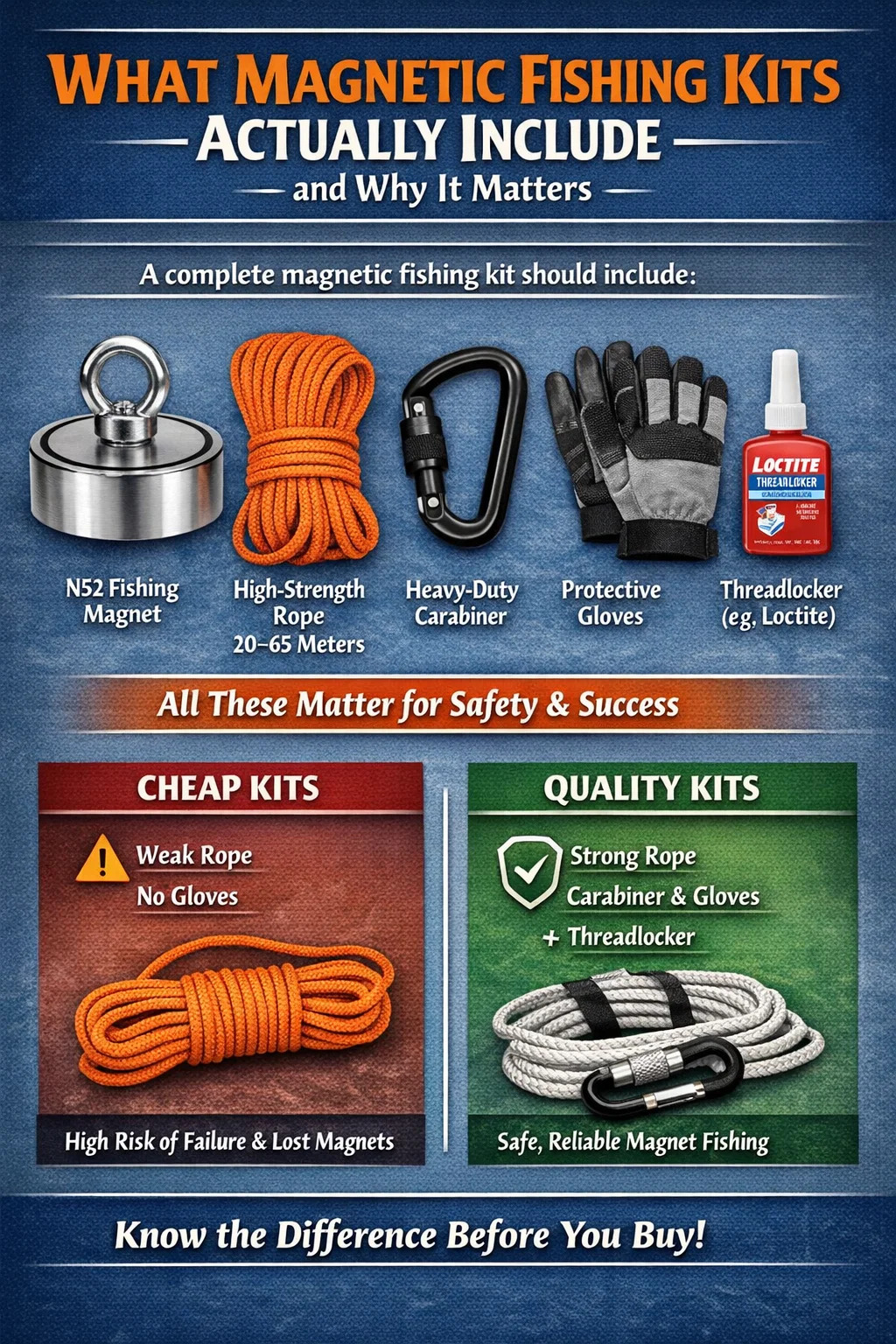
If you're looking for a straightforward answer: a complete magnetic fishing kit includes a neodymium fishing magnet, a high-tensile rope (usually 20–65 meters), a locking carabiner, protective gloves, and often a thread-locking compound like Loctite. These components together determine whether your magnet fishing experience is productive and safe — or frustrating and dangerous. Cheap kits that skip gloves or use low-grade rope account for the majority of accidents and lost magnets reported in online magnet fishing communities.
The market for magnetic fishing kits has expanded significantly since around 2018. What was once a niche hobby practiced mostly in the Netherlands and UK has grown into a global pastime with dedicated forums, YouTube channels with millions of subscribers, and organized community clean-up events. With that growth has come a flood of kit options — ranging from $15 budget packs to $120+ professional setups — and a corresponding need for buyers to understand exactly what separates a functional kit from a waste of money.
This guide breaks down every component, explains the key specifications you should compare, and gives you concrete recommendations based on real-world use cases rather than marketing language.
The Fishing Magnet: The Component Everything Else Depends On
The fishing magnet is the core of any kit. Every other component exists to support it. Almost all modern fishing magnets use neodymium (NdFeB) magnets — specifically grade N52, which is the strongest commercially available grade. These are not ordinary magnets. A 100mm diameter N52 neodymium fishing magnet can exert a pull force exceeding 500 lbs (227 kg) on flat steel, which is enough to lift a small motorcycle out of water under ideal conditions.
However, "pull force" ratings are frequently misunderstood and exaggerated by manufacturers. The advertised figure always represents the maximum force achievable when the magnet is in full, flat contact with a thick steel plate under laboratory conditions. In real-world magnet fishing scenarios — objects partially buried in silt, approached at angles, covered in rust or paint — you'll typically achieve 20% to 40% of the rated pull force at best. Keep this firmly in mind when selecting a kit.
Single-Sided vs. Double-Sided Fishing Magnets
The two main configurations you'll find in magnetic fishing kits are single-sided and double-sided magnets:
- Single-sided magnets have a threaded bolt eye on one face and magnetic force only on the opposite face. They are ideal for vertical drops — lowering straight down from a bridge or canal wall. Their pull is concentrated and powerful in one direction.
- Double-sided magnets have magnetic force on both top and bottom faces, with the eyebolt attached to the side. These excel at dragging along a riverbed or lake bottom because they can attract objects from above and below simultaneously. For the same diameter, double-sided magnets typically offer around 1.5 to 1.8 times the total surface pull force of a single-sided model.
Beginners usually benefit most from a single-sided magnet in the 300–500 lbs pull range, as it's easier to control and retrieve. Experienced hobbyists fishing large, open water bodies often prefer double-sided models with 800+ lbs combined pull force.
Magnet Size and Pull Force Reference Table
| Diameter | Rated Pull Force | Realistic Pull Force | Best Use Case |
|---|---|---|---|
| 60mm | ~200 lbs | 50–80 lbs | Kids, shallow ponds, light finds |
| 75mm | ~300 lbs | 80–120 lbs | Beginners, urban canals |
| 90mm | ~500 lbs | 120–200 lbs | Intermediate, rivers, bridges |
| 100mm+ | 600–1200 lbs | 200–450 lbs | Advanced, deep water, heavy recovery |
Rope, Carabiner, and Knot — The Components People Underestimate
Experienced magnet fishers will tell you that the rope is the most likely point of failure in any magnetic fishing kit, not the magnet. The magnet itself, being a solid block of steel-encased neodymium, rarely fails. The rope, especially under the sudden shock of snagging a heavy object, is where kits reveal their quality — or lack of it.
What to Look for in a Magnet Fishing Rope
- Material: Nylon and polyester ropes are the most common. Nylon has slight elasticity (around 5–10% stretch), which acts as a shock absorber when a snagged object suddenly releases. Polyester stretches less and holds knots slightly better in wet conditions. Either works well. Avoid polypropylene ropes — they float, which sounds convenient, but they degrade quickly under UV exposure and abrasion.
- Breaking strength: The rope's minimum breaking strength should be at least 3 times the magnet's rated pull force. For a 500 lb fishing magnet, your rope should have a breaking strength of no less than 1,500 lbs. Most quality kits use 8mm ropes with 2,000–2,600 lbs breaking strength.
- Length: Standard kit ropes run 20 meters (65 ft), which covers most bridge drops and canal fishing. For deep reservoirs or long horizontal drags, opt for kits with 30–65 meter ropes or purchase additional rope separately.
- Diameter: 8mm is the sweet spot for grip comfort and strength. Thinner ropes (6mm) cut into hands under heavy loads. Thicker ropes (10mm+) are harder to handle and add unnecessary weight to the kit.
Carabiners and Connection Hardware
Many beginner magnetic fishing kits include a carabiner to allow quick swapping of magnets without retying knots. This is convenient, but introduces a potential weak point. Only use carabiners rated for at least 5 kN (approximately 1,124 lbs) of load. Look for CE-certified climbing carabiners — these are tested rigorously. Avoid decorative or keychain-style carabiners, which are entirely unsuitable and can fail at under 50 lbs.
Many serious magnet fishers skip the carabiner entirely and tie their rope directly to the magnet's eyebolt using a double palomar knot or a figure-eight follow-through. These knots retain approximately 95% of the rope's rated strength, versus a carabiner connection which, if misaligned under load, can reduce effective strength by 30% or more.
Kit Tiers Explained: Budget, Mid-Range, and Professional
Magnetic fishing kits on the market broadly fall into three tiers. Understanding what each tier genuinely offers prevents both overspending and buying equipment that fails quickly.
Budget Kits ($15–$35)
Budget kits typically include a 60–75mm single-sided magnet with a claimed 200–300 lb pull force, a 20-meter rope of variable quality, and a small carabiner. These kits are suitable for children, beginners testing the hobby, and shallow-water fishing where you're mostly recovering small items like coins, bolts, and knife blades. The magnets in this range are functional but often use slightly lower-grade neodymium with inconsistent coating quality — expect some surface rust after 6–12 months of regular use.
The main risk with budget kits is the rope. Several popular budget kits on major e-commerce platforms have received negative reviews specifically citing rope failure — fraying after just a few outings or knot slippage under moderate loads. If buying in this tier, inspect the rope carefully before use and replace it with a hardware-store nylon or polyester rope if there's any doubt.
Mid-Range Kits ($40–$75)
This is where the hobby becomes genuinely rewarding. Mid-range magnetic fishing kits typically feature 90–100mm N52 neodymium magnets rated 500–800 lbs, quality 8mm nylon or polyester rope, a heavy-duty locking carabiner, protective gloves, and a small bottle of thread-locking compound. The thread-locking compound is important — it prevents the eyebolt from unscrewing during use, which is one of the most common ways magnets are lost by beginners who don't know to secure it.
Brands like Brute Magnetics, WUKONG, and Mutuactor have established solid reputations in this tier. These kits are appropriate for fishing from bridges, piers, canal banks, and most urban waterways. You'll be able to recover significant finds: tools, knives, bikes, firearms (in relevant jurisdictions), and occasionally safes.
Professional Kits ($80–$120+)
Professional-tier magnetic fishing kits go beyond a single large magnet. They often include double-sided fishing magnets with 1,000–1,500 lbs combined pull force, 30–65 meter ropes with 3,000+ lbs breaking strength, grappling hooks for non-ferrous recovery, multiple carabiners, heavy gloves, a carry bag, and sometimes a second smaller magnet for detailed work. Some premium kits include a rare-earth pot magnet specifically designed for horizontal dragging — a different tool from the standard fishing magnet that excels in silt-heavy environments.
These kits make most sense for hobbyists who fish regularly (multiple times per month), fish in deep water or fast-moving rivers, or participate in organized recovery operations. The investment is justified by longevity and capability, not novelty.
Safety: What the Instruction Manuals Don't Tell You
Neodymium fishing magnets are powerful tools, and powerful tools have genuine injury potential that casual product listings tend to downplay. Fingers, hands, and metal tools caught between a fishing magnet and a steel surface can be crushed instantly. A 500 lb pull force magnet snapping onto a steel bridge railing can break finger bones without warning. This is not a theoretical risk — it's a well-documented hazard in the hobby.
Handling Rules That Experienced Fishers Follow
- Always wear the gloves included in your kit. They won't prevent a serious crush injury, but they protect against cuts from sharp metal edges on recovered items and reduce rope burn significantly.
- Never let the magnet swing freely near metal surfaces. Lower it in a controlled manner. Swinging a 500 lb pull magnet toward a steel fence post or railing is how people get hurt.
- Keep fishing magnets away from electronics, pacemakers, credit cards, and hearing aids. The magnetic field of an N52 neodymium fishing magnet can damage electronic devices and erase magnetic stripe cards at distances up to 15–20cm.
- Children should never use fishing magnets above 200 lbs pull force without direct adult supervision, and should never handle the magnet during retrieval — only adults should manage the magnet-to-surface contact.
- When transporting your fishing magnet, keep it in the protective case or wrap it in a dense foam sleeve. Loose magnets in a bag will attract any nearby ferrous metal and create dangerous, difficult-to-separate assemblies.
What to Do If You Find Suspicious or Dangerous Items
Magnet fishing regularly recovers firearms, ammunition, and occasionally unexploded ordnance. If you recover a firearm, do not handle it beyond what's necessary to secure it safely, do not attempt to unload it, and contact local law enforcement immediately. In most jurisdictions, recovering and retaining a firearm without reporting it is illegal, regardless of how it ended up in the water. Most police departments have straightforward procedures for receiving recovered weapons and will not charge you for making the report in good faith.
For items that look like grenades, shells, or other military ordnance — and this does happen more often than people expect, particularly in European waterways near former WWII sites — leave the item exactly where you found it, secure the area, and call emergency services. Do not attempt to move, clean, or transport these items under any circumstances.
Technique: How to Actually Fish Effectively with a Magnet Kit
Owning a quality kit is half the equation. Knowing how to deploy it productively makes the difference between a successful outing and repeated snags, lost magnets, and an empty haul.
The Vertical Drop Method
From a bridge, pier, or canal bank, lower the fishing magnet straight down. Allow it to rest on the bottom for 10–15 seconds, then slowly retrieve it while maintaining slight tension on the rope. This method works best with single-sided magnets and is ideal for areas with heavy boat traffic or significant underwater debris that could snag a dragged magnet. Vertical drops in bridge channels have historically yielded the most dramatic single-session finds — bicycles, scooters, and lost phones are common in urban environments.
The Horizontal Drag Method
Cast the fishing magnet out and drag it slowly toward you along the bottom. Double-sided magnets excel here because the bottom face drags against the substrate while the top face captures items that float slightly above the silt layer. Move the magnet at roughly the pace of a slow walk — too fast and lightweight items slide free; too slow and you'll snag every piece of debris on the bottom. Fan-casting in an arc pattern, like you would with a lure, allows you to cover wide areas systematically.
Dealing with Snags
Snags are inevitable. When the magnet sticks to an immovable object — a submerged shopping cart frame, a sunken engine block, an old anchor — the correct response is not to yank hard on the rope. That's how ropes break and magnets are lost forever. Instead, change the angle of pull by moving along the bank, then apply steady, gradual pressure. Most snags release when the pull angle shifts from vertical to horizontal or vice versa. A rocking motion — alternating tension and slack — also works well for objects embedded in silt.
If the magnet is truly stuck, loop a separate length of rope around the main rope at water level and lever against the bank edge to create a mechanical advantage. This technique, borrowed from boating and anchor recovery, can multiply your effective pull force by a factor of 2–4 depending on geometry.
Reading the Water
The most productive magnet fishing spots share common characteristics. Areas where people congregate near water — fishing piers, swimming spots, boat launches, and market bridges in historic town centers — accumulate dropped metal objects over decades. Old canal locks are particularly rewarding; generations of boaters have dropped tools, hardware, and cargo at these bottlenecks. Areas downstream of large weirs collect objects carried by current and deposited when flow slows.
Urban waterways often yield more finds per session than rural ones simply because human activity density is higher. Canals running through industrial districts of 19th-century cities can contain layers of metal debris going back 150+ years. European hobbyists fishing Dutch and Belgian canals regularly recover items from both World Wars.
Legal Considerations Before You Drop a Fishing Magnet in the Water
Legality is the aspect of the hobby most commonly ignored by new participants and the one most likely to cause real problems. Magnet fishing is not uniformly legal everywhere, and ignorance of local regulations is not a defense.
Permission and Land Access
In most countries, the waterway itself — the body of water and its bed — is managed by a government authority or private landowner. Access to the bank is a separate legal question. In the UK, for example, most rivers and canals are managed by the Canal & River Trust or the Environment Agency, and magnet fishing on CRT-managed waterways requires a free permit obtainable from their website. Fishing on private land without permission constitutes trespass.
In Germany, magnet fishing occupies a legal gray area that varies by state (Bundesland), with some states explicitly requiring a permit and others having no specific regulation — defaulting to general rules about disturbance of waterway beds. In France, all waterway beds are state property and fishing them without authorization is technically illegal under heritage protection laws, though enforcement is inconsistent.
In the United States, regulations vary enormously at state and local level. National parks prohibit magnet fishing under the Antiquities Act. State parks often have similar prohibitions. Many municipal waterways permit it informally, but it's worth checking with your local parks department before fishing any managed water body.
Recovered Item Ownership
In most jurisdictions, items recovered from waterways are not automatically yours to keep. In the UK, items of historical or archaeological significance must be reported under the Treasure Act. In the US, items found in navigable waterways may be subject to admiralty law. As a practical rule: report firearms to police, report anything that looks historically significant to relevant heritage authorities, and keep records of what you recover and where. This protects you legally and contributes to the hobby's reputation for responsible environmental stewardship.
Maintenance and Long-Term Care for Your Kit
A well-maintained magnetic fishing kit can last years. Neglect the maintenance and you'll find yourself buying replacements far sooner than necessary.
Caring for the Fishing Magnet
- Rinse the magnet with fresh water after every outing, especially if you've been fishing in salt or brackish water. Saltwater accelerates corrosion of the nickel-copper-nickel coating that protects the neodymium core.
- Dry the magnet thoroughly before storage. Water trapped under attached debris is the most common cause of premature coating failure.
- If surface rust spots appear, address them promptly. Light rust on the steel housing (not the magnet face) can be treated with a rust-converter product. Rust on the magnetic face itself reduces pull force and should be addressed with fine-grit wet/dry sandpaper, followed by a protective coating of clear rust-inhibiting enamel.
- Re-apply thread-locking compound to the eyebolt every 10–15 sessions. The compound degrades over time and with exposure to water.
Caring for the Rope
- Inspect the rope for fraying, particularly at the knot or carabiner connection point, before every session. This is where stress concentrates and where failure begins.
- Rinse and dry the rope after each outing. Wet ropes stored coiled in a bag develop mold and mildew that weakens the fibers over time.
- Replace the rope at the first sign of significant fraying or core exposure. A rope that looks 80% intact can fail under load. Given that replacement ropes cost $10–$20 for a quality 20-meter section, there's no reason to gamble with a compromised rope.
Choosing the Right Kit for Your Specific Situation
Rather than a generic recommendation, here's how to match kit selection to your actual circumstances:
| Situation | Recommended Magnet | Rope Length | Budget Range |
|---|---|---|---|
| Gift for a child (8–12 yrs) | 60mm single-sided, ~200 lbs | 15–20m | $20–$35 |
| First-time adult hobbyist | 90mm single-sided, 500 lbs | 20–30m | $45–$65 |
| Regular weekend hobbyist | 100mm double-sided, 900 lbs | 30–40m | $70–$95 |
| Deep water / river recovery | 120mm double-sided, 1200+ lbs | 50–65m | $100–$130 |
| Community cleanup / organized events | Multi-magnet pro kit | 40–65m per member | $100–$150+ |
One practical note: it's almost always better to buy one quality mid-range kit than two budget kits. Budget kits accumulate in closets after the first frustrating outing. A properly specified fishing magnet with a good rope and the right technique turns a new hobby into one you'll return to consistently.