English
 Español
 русский
 日本語
日本語
 عربى
عربى

Content
- 1 What You Need to Know First About Precast Concrete Steps
- 2 Why the Lifting System Matters More Than Most Contractors Assume
- 3 Types of Lifting Inserts Used in Precast Concrete Steps
- 4 Rigging Configurations for Precast Concrete Steps
- 5 Lifting Equipment Selection for Precast Concrete Step Installation
- 6 Planning and Executing a Safe Precast Concrete Step Lift
- 7 Precast Concrete Step Installation: Subbase Preparation and Final Placement
- 8 Differences Between Residential and Commercial Precast Concrete Step Lifting
- 9 Common Mistakes in Precast Step Lifting and How to Avoid Them
- 10 Maintenance Considerations After Precast Concrete Step Installation
What You Need to Know First About Precast Concrete Steps
Precast concrete steps are manufactured off-site in controlled factory conditions, then transported and installed as complete units. This method delivers consistent quality, faster installation timelines, and long-term structural durability that poured-in-place alternatives often cannot match. A single precast stair unit for a residential entrance typically weighs between 800 and 2,500 pounds depending on the number of risers, width, and material density. Larger commercial units can exceed 5,000 pounds.
Because of this weight, a proper Lifting System For Precast Concrete is not optional — it is the central factor that determines whether an installation goes smoothly or becomes a safety incident. Every project involving precast steps requires deliberate planning around how those units will be lifted, maneuvered, and placed with accuracy.
This article covers the full scope: lifting hardware, anchor types, rigging configurations, load calculations, safety protocols, and the practical differences between residential and commercial installations. Whether you are a contractor, engineer, or procurement specialist, the information here is specific enough to be directly useful on the job.
Why the Lifting System Matters More Than Most Contractors Assume
Dropping or mishandling a precast concrete step unit does not just damage the product — it creates liability, delays the project, and can cause serious injury. According to the Bureau of Labor Statistics, struck-by incidents involving concrete and masonry products account for a significant portion of construction fatalities each year. Proper lifting systems directly reduce this risk.
A lifting system for precast concrete steps typically includes four components working together: the embedded lifting insert or anchor cast into the concrete during fabrication, the lifting hardware (clutch, hook, or shackle) that connects to the insert, the rigging (chains, slings, or cables), and the lifting machine itself (crane, forklift, or telehandler). Weakness in any one of these four areas compromises the entire system.
The most common failure point is the interface between the lifting insert and the hardware — specifically, using mismatched clutch types or worn hardware with inserts they were not designed for. Manufacturers like Halfen, Meadow Burke, and PCI-certified suppliers publish compatibility charts for this exact reason, and ignoring them is a leading cause of lifting failures on precast concrete projects.
Load Rating and Safety Factor Requirements
Every lifting insert embedded in a precast concrete step has a rated working load limit (WLL). Industry standard in North America requires a minimum safety factor of 5:1 for lifting inserts used in precast applications. This means a 2,000-pound stair unit requires inserts rated for at least 10,000 pounds combined capacity across all active lift points.
When only two lift points are used and the rigging forms a sling angle less than 90 degrees, the load on each leg increases substantially. At a 60-degree sling angle, each leg carries approximately 115% of what it would carry at vertical. At 45 degrees, that rises to 141%. Rigging crews must account for sling angle when selecting hardware, and precast step manufacturers should specify minimum sling angles in their technical documentation.
Types of Lifting Inserts Used in Precast Concrete Steps
The insert cast into the concrete is the foundation of the entire lifting system. For precast concrete steps specifically, manufacturers use several different insert types depending on the step geometry, weight, and intended rigging configuration.
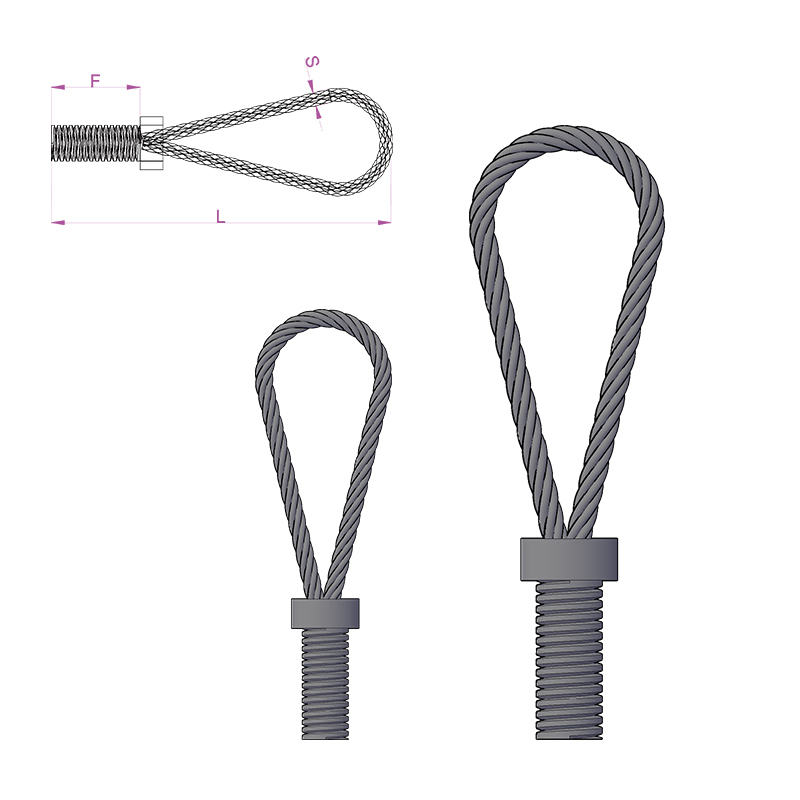
Coil Loop Inserts
Coil loop inserts consist of a looped wire or bar that protrudes from the concrete surface and a coil rod anchor embedded within the element. These are among the most widely used inserts for precast concrete steps in residential construction. They are cost-effective, simple to use, and compatible with a range of clutch and hook configurations. Standard coil loops for step applications are available in capacities ranging from 1,000 to 8,000 pounds per insert.
One limitation: coil loops require sufficient concrete cover and edge distance to develop their rated capacity. On narrow stair units or steps with tight geometric constraints, this can be a design challenge that must be resolved at the fabrication stage, not on the job site.
Flat Plate Anchors and Ferrule Inserts
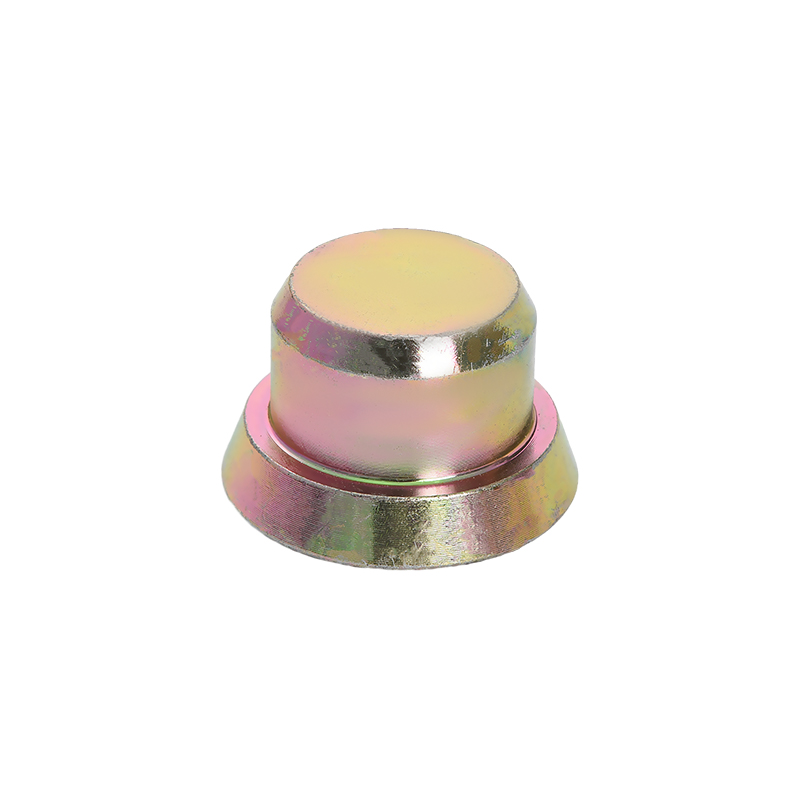
Flat plate anchors are cast flush with the concrete surface. They accept a proprietary bolt or eye bolt and are used in applications where a protruding loop would interfere with formwork or finishing. Ferrule inserts work similarly — they are internally threaded sleeves cast into the concrete that accept a lifting eye bolt during installation and can be plugged with a standard bolt after placement.
Ferrule inserts are particularly common in architectural precast concrete steps where surface appearance matters, because the insert can be covered with a matching plug or cap after the lifting hardware is removed.
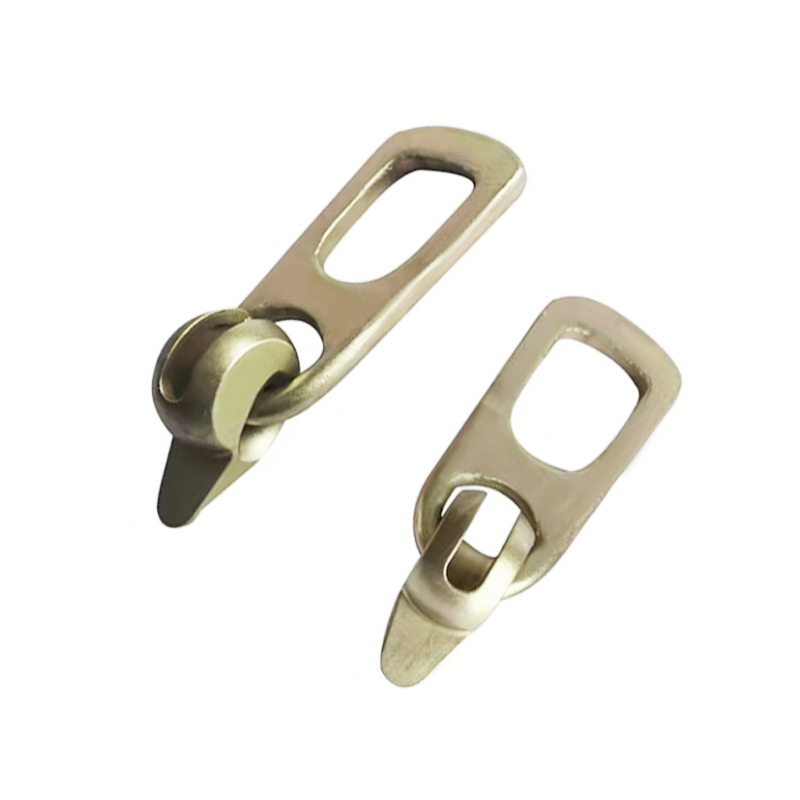
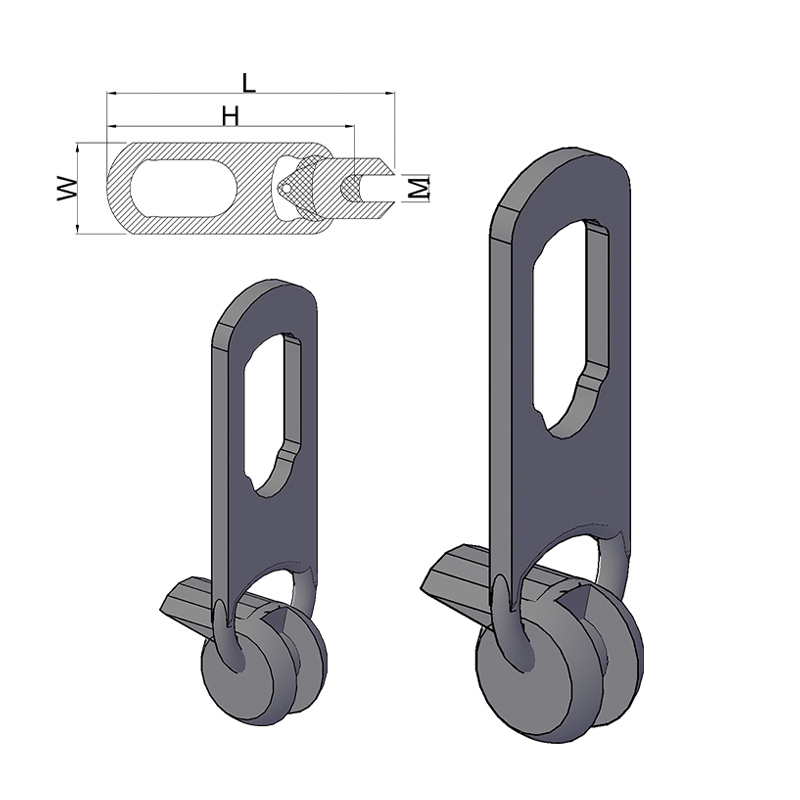
Swivel Plate Lifting Anchors
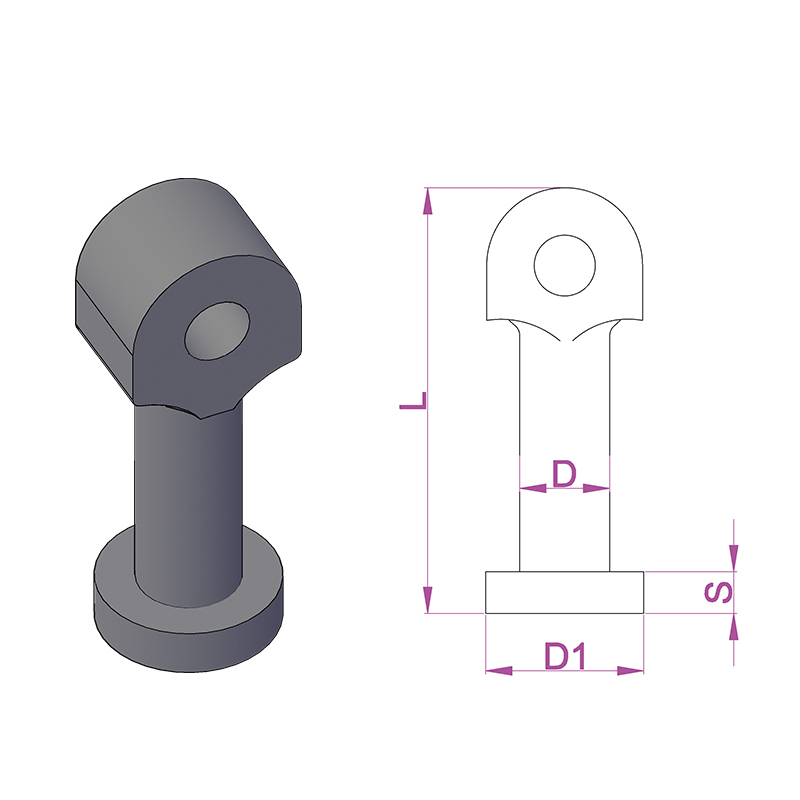
Swivel plate anchors are engineered inserts that allow the lifting hardware to pivot relative to the anchor — typically across a 180-degree arc. This is especially useful for precast concrete steps because the optimal rigging angle for pickup (horizontal slab) is different from the final placement angle, and swivel anchors accommodate this shift without stressing the insert in an unintended direction.
Suppliers like Halfen and Pfeifer offer swivel plate systems rated from 2,200 pounds to over 22,000 pounds per anchor. For large commercial precast stair sections exceeding 3,000 pounds, swivel anchors are the preferred solution in most engineered lifting plans.
Comparison of Common Insert Types for Precast Steps
| Insert Type | Typical WLL Range | Best Application | Surface Finish Impact |
|---|---|---|---|
| Coil Loop | 1,000 – 8,000 lbs | Residential steps, standard commercial | Minor loop hole remains |
| Ferrule Insert | 2,000 – 12,000 lbs | Architectural precast, exposed finish | Pluggable, low visibility |
| Flat Plate Anchor | 2,500 – 15,000 lbs | Tight formwork situations | Flush, minimal |
| Swivel Plate Anchor | 2,200 – 22,000+ lbs | Heavy commercial, complex rigging | Requires pocket or recess |
Rigging Configurations for Precast Concrete Steps
Rigging for precast concrete steps is not as straightforward as rigging for flat slabs or wall panels. Steps have an irregular center of gravity. The mass is distributed unevenly across the tread-riser geometry, which means that a symmetrically placed four-point rigging setup will not always produce a level lift. Experienced riggers and engineers account for this by adjusting pickup point locations or by using a spreader beam to equalize load distribution.
Two-Point vs. Four-Point Rigging
Two-point rigging is common for smaller residential precast concrete steps — units with two to four risers and a weight under 1,500 pounds. Two coil loop inserts placed along the top tread, connected to a single crane hook via a bridle sling, can lift the unit effectively if the sling geometry is correct.
Four-point rigging is standard for larger units. The four pickup points are placed symmetrically across the step unit, and the rigging connects to a spreader bar or lifting beam above. Four-point systems reduce individual insert loads by distributing the total weight across more anchor points, and they improve stability during the swing and placement phase of the lift.
One important consideration: in a four-point system, if one leg of the rigging is slightly shorter than the others, the load distribution becomes uneven. In practice, three of the four anchors may carry virtually all the load while the fourth carries almost none. This is why adjustable lifting beams with equalizing mechanisms are preferred for four-point lifts on precast steps.
Spreader Beams and Lifting Frames
A spreader beam is a rigid horizontal member that hangs from the crane hook and distributes the lift load to multiple pickup points below. For precast concrete steps, spreader beams serve two purposes: they separate the rigging legs to achieve a more vertical pull at each insert, and they allow fine control over the lift geometry so the unit can be picked up level and set down level.
Lifting frames go further — they are custom fabricated or adjustable steel frames that bolt or clamp to the stair unit itself, distributing the lift force through the frame structure rather than purely through the concrete inserts. This approach is used for very large or architecturally sensitive precast stair sections where insert loads must be minimized or where the step geometry makes direct rigging impractical.
Sling Types: Chain vs. Wire Rope vs. Synthetic
Each sling material has different properties relevant to precast concrete step lifting:
- Chain slings are durable, resistant to abrasion and heat, and can be shortened with grab hooks for length adjustment. They are the most common choice for precast concrete lifting because of their resistance to the abrasive concrete surfaces and their ability to withstand repeated heavy use. Grade 80 and Grade 100 alloy steel chain is the industry standard.
- Wire rope slings offer flexibility and are lighter than chain for equivalent capacity. They are less forgiving of sharp edges and should be used with edge protectors when contact with concrete corners is unavoidable.
- Synthetic web slings are the lightest option and do not scratch finished surfaces. They are suitable for architectural precast steps where surface protection matters, but they are not appropriate for rough precast steps with exposed aggregate edges that could cut the webbing.
Lifting Equipment Selection for Precast Concrete Step Installation
The choice of lifting machine depends on the weight of the precast step unit, the reach required, the access constraints of the job site, and the precision needed for placement. Three equipment types dominate precast step installation: mobile cranes, telescopic handlers (telehandlers), and rough terrain forklifts.
Mobile Cranes
For commercial projects involving large precast concrete step units — particularly multi-flight stair assemblies weighing 3,000 to 10,000 pounds — a mobile crane is the standard solution. A 40-ton hydraulic truck crane can handle virtually all residential and mid-scale commercial precast step installations with ease, provided the site has adequate setup space and ground bearing capacity.
Crane selection must account for the maximum load at the required radius. A 40-ton crane operating at 30 feet of radius may have a capacity of only 12 to 15 tons — always consult the load chart, not just the crane's rated tonnage. This is a mistake that even experienced contractors make: confusing the crane's maximum capacity (at minimum radius, often just a few feet) with its actual capacity at the working radius on their specific job site.
Telehandlers and Rough Terrain Forklifts
Telehandlers are versatile machines capable of lifting precast concrete steps in the 1,500 to 6,000-pound range, depending on the model and boom extension. They are widely used for residential precast step installation because they can maneuver in tighter spaces than a truck crane and do not require the same level of ground preparation.
A telehandler used for lifting precast concrete steps must be equipped with an approved lifting jib attachment and the lift must be conducted within the machine's load chart limits. Operating a telehandler at the edge of its capacity — or beyond it — is a leading cause of tip-over incidents on residential construction sites. Industry guidelines from manufacturers like JLG and Manitou require load chart compliance and ground stability assessment before any precast lift.
Rough terrain forklifts with a rated capacity of 6,000 to 15,500 pounds can handle heavier residential and light commercial precast step units, particularly when the lift radius is short and the step can be approached directly from the front. The limitation is vertical reach — most rough terrain forklifts max out at 15 to 20 feet of lift height, which is sufficient for most step installation scenarios but may not work for elevated entrances or second-floor landings.
Equipment Selection by Project Type
| Project Type | Typical Step Weight | Recommended Equipment | Key Consideration |
|---|---|---|---|
| Residential (3–5 risers) | 800 – 2,000 lbs | Telehandler or small crane | Site access, ground conditions |
| Commercial entrance (5–8 risers) | 2,000 – 5,000 lbs | 25–40 ton mobile crane | Working radius, load chart |
| Large commercial / multi-flight | 5,000 – 15,000+ lbs | 50–100 ton mobile crane | Engineered lift plan required |
| Confined urban site | Variable | Knuckle boom crane or pick-and-carry | Outrigger footprint, street permits |
Planning and Executing a Safe Precast Concrete Step Lift
A lift plan is a documented procedure that outlines every aspect of a precast lifting operation before it begins. For precast concrete steps above a certain weight threshold — typically 2,000 pounds in most jurisdictions — a formal lift plan prepared or reviewed by a qualified engineer is either required by law or strongly recommended by insurance carriers and general contractors.
What a Lift Plan for Precast Steps Must Include
- The weight of each precast concrete step unit, confirmed by the precaster's shop drawings or pour records
- The center of gravity location for the unit, which determines pickup point placement
- The type, number, and rated capacity of lifting inserts embedded in the element
- The rigging configuration — number of legs, sling angle, hardware specifications
- The lifting machine selected, its rated capacity at the required radius, and its outrigger or stabilizer setup
- Ground bearing capacity assessment, particularly for crane outrigger pads
- Exclusion zones — the area beneath and around the lift path that must remain clear of personnel
- Signal person and communication protocols between the crane operator and the ground crew
- The target placement location, including subgrade preparation and temporary support requirements
Concrete Strength Requirements Before Lifting
Precast concrete steps should not be lifted until the concrete has reached sufficient strength to develop the rated capacity of the embedded lifting inserts. Most precasters specify a minimum compressive strength of 3,000 psi before stripping and handling, with insert manufacturers often requiring 4,000 psi for full rated capacity.
In practice, high-strength mix designs used by precast manufacturers — typically 5,000 to 7,000 psi design strength — reach stripping strength within 16 to 24 hours with steam curing. However, job site precast or non-cured elements may take 3 to 7 days to reach adequate strength. Lifting a precast step before the concrete is ready is a critical failure mode that can cause the inserts to pull out catastrophically.
Pre-Lift Inspection Checklist
- Verify the precast step unit matches the shop drawing dimensions and weight
- Inspect all lifting inserts for damage, corrosion, or concrete defects around the insert pocket
- Confirm all rigging hardware has current inspection tags and is rated for the load
- Check crane load chart at the planned operating radius before the lift begins
- Establish and communicate the exclusion zone to all site personnel
- Test lift the unit a few inches and hold for a minimum of 30 seconds to verify balance and insert integrity
- Confirm the placement area is prepared and the subbase is compacted and at the correct elevation
Precast Concrete Step Installation: Subbase Preparation and Final Placement
The lifting system gets the precast step to the right location — but what the step lands on determines its long-term performance. Settling, cracking, and heaving of precast concrete steps are almost always traceable to subbase problems rather than defects in the precast element itself.
Gravel and Compacted Base Requirements
Residential precast concrete steps are typically set on a compacted gravel base. The standard specification calls for a minimum of 6 inches of compacted crushed stone or gravel, with a minimum bearing capacity of 1,500 to 2,000 psf. For heavier commercial units, engineered fill or a concrete pad is required.
In cold climates, frost depth is a critical factor. If the step base does not extend below the frost line — which ranges from 12 inches in southern states to over 48 inches in Minnesota and similar climates — seasonal frost heave will move the step unit year after year, eventually causing cracking or joint failure. Many precasters in northern climates recommend setting residential steps on compacted gravel extending to at least 4 to 6 inches below the local frost depth.
Shimming, Leveling, and Grouting
Once the crane or telehandler positions the precast step unit, fine adjustment is accomplished with steel shim plates or hardwood wedges. The unit must be level side-to-side and must have the correct slope front-to-back — typically a 1% to 2% positive slope (step nose lower than the back edge) to promote drainage and prevent water accumulation on the treads.
For commercial installations or wherever the step abuts a foundation wall, non-shrink grout is used to fill the gap between the step unit and the wall, and to fill any voids beneath the unit. Non-shrink grout for precast step applications should meet ASTM C1107 requirements and achieve a minimum compressive strength of 5,000 psi at 28 days.
Differences Between Residential and Commercial Precast Concrete Step Lifting
The principles of a Lifting System For Precast Concrete apply across both sectors, but the practical requirements differ substantially between a four-riser residential stoop and a twelve-riser commercial entrance assembly.
Residential Precast Steps
Residential precast concrete steps range from simple two-riser units to six-riser assemblies with integrated landings. Weights typically fall between 800 and 3,000 pounds. The lifting system is usually straightforward: two or four coil loop inserts, chain slings, and a telehandler or small truck crane.
The main challenge in residential installation is access. Properties often have landscaping, existing foundations, underground utilities, and narrow side yards that limit crane positioning. A telehandler can often work in a 10-foot wide corridor that a truck crane cannot access, which is why telehandlers dominate residential precast step installation in suburban markets.
Commercial Precast Steps
Commercial precast concrete step installations involve larger units, more complex geometry, and greater coordination requirements. A commercial entrance with eight to twelve risers, side returns, and a top landing may be fabricated as a single monolithic unit weighing 8,000 to 15,000 pounds, or as a series of interlocking precast sections each requiring individual lifts and precise placement relative to adjacent pieces.
Commercial installations typically require a formal lift plan, a certified rigger and signalperson, and documentation of all lifting hardware inspections. The precaster's engineer will have specified the lifting inserts in the shop drawings, and the contractor is responsible for verifying that the on-site rigging matches what was engineered. Deviating from the engineered lift plan without written authorization from the engineer of record is a serious liability exposure.
Common Mistakes in Precast Step Lifting and How to Avoid Them
Even experienced crews make errors when lifting precast concrete steps. The following mistakes appear repeatedly across project post-mortems and insurance claims:
- Using mismatched hardware: Attaching a lifting clutch designed for one manufacturer's coil loop to another manufacturer's insert can reduce effective capacity by 30% to 60% or result in complete disengagement under load. Always confirm hardware-insert compatibility in writing from the supplier.
- Ignoring sling angles: A 30-degree sling angle from horizontal increases the load on each leg to 200% of the vertical equivalent — effectively doubling the tension in the rigging. Crews that do not calculate sling angle factors regularly overstress hardware without realizing it.
- Lifting before adequate cure: Stripping precast steps too early — before the concrete has developed adequate compressive strength around the inserts — causes pullout failures. This is most common when project schedules pressure crews to accelerate delivery.
- Skipping the test lift: Not performing a brief test lift — raising the unit 6 to 12 inches and holding — before committing to the full lift is a missed opportunity to catch balance issues and insert problems before they become incidents.
- Inadequate subbase preparation: Placing a precast step on uncompacted fill or organic soil leads to differential settling. Steps that are level on installation day can be 2 to 3 inches out of level within a single freeze-thaw cycle if the base was not properly prepared.
- Personnel under the load: Workers standing beneath or adjacent to a suspended precast step are in the exclusion zone. This is a OSHA violation and a common factor in struck-by fatality incidents in the precast industry.
Maintenance Considerations After Precast Concrete Step Installation
Once precast concrete steps are placed and grouted, the lifting inserts remain embedded in the concrete permanently. For architectural or residential applications, the insert pockets are typically filled with a grout or caulk-compatible plug. In commercial applications, the pockets are filled with non-shrink grout and finished to match the surrounding surface.
Precast concrete steps require very little maintenance compared to poured-in-place alternatives. The primary maintenance tasks are:
- Annual inspection of joint sealants and grout between the step unit and the building foundation — particularly in climates with significant freeze-thaw cycling
- Checking for differential settlement every two to three years, particularly during the first five years after installation when subbase consolidation is most active
- Sealing the concrete surface every three to five years with a penetrating silane or siloxane sealer to reduce chloride ingress from deicing salts — a major cause of rebar corrosion and surface spalling in precast steps exposed to winter maintenance chemicals
- Inspecting insert pocket plugs for cracking or loss — exposed metal inserts can corrode and expand, causing surface cracking around the pocket
A properly installed and maintained precast concrete step unit has a service life of 50 years or more, making it one of the most durable entrance solutions available for both residential and commercial applications. The investment in a proper lifting system during installation directly supports this long-term performance — a unit that is damaged during lifting, or placed on an inadequate base, will fail long before that service life is reached.