English
 Español
 русский
 日本語
日本語
 عربى
عربى


Content
The Short Answer: Is Magnet Fishing Illegal in the US?
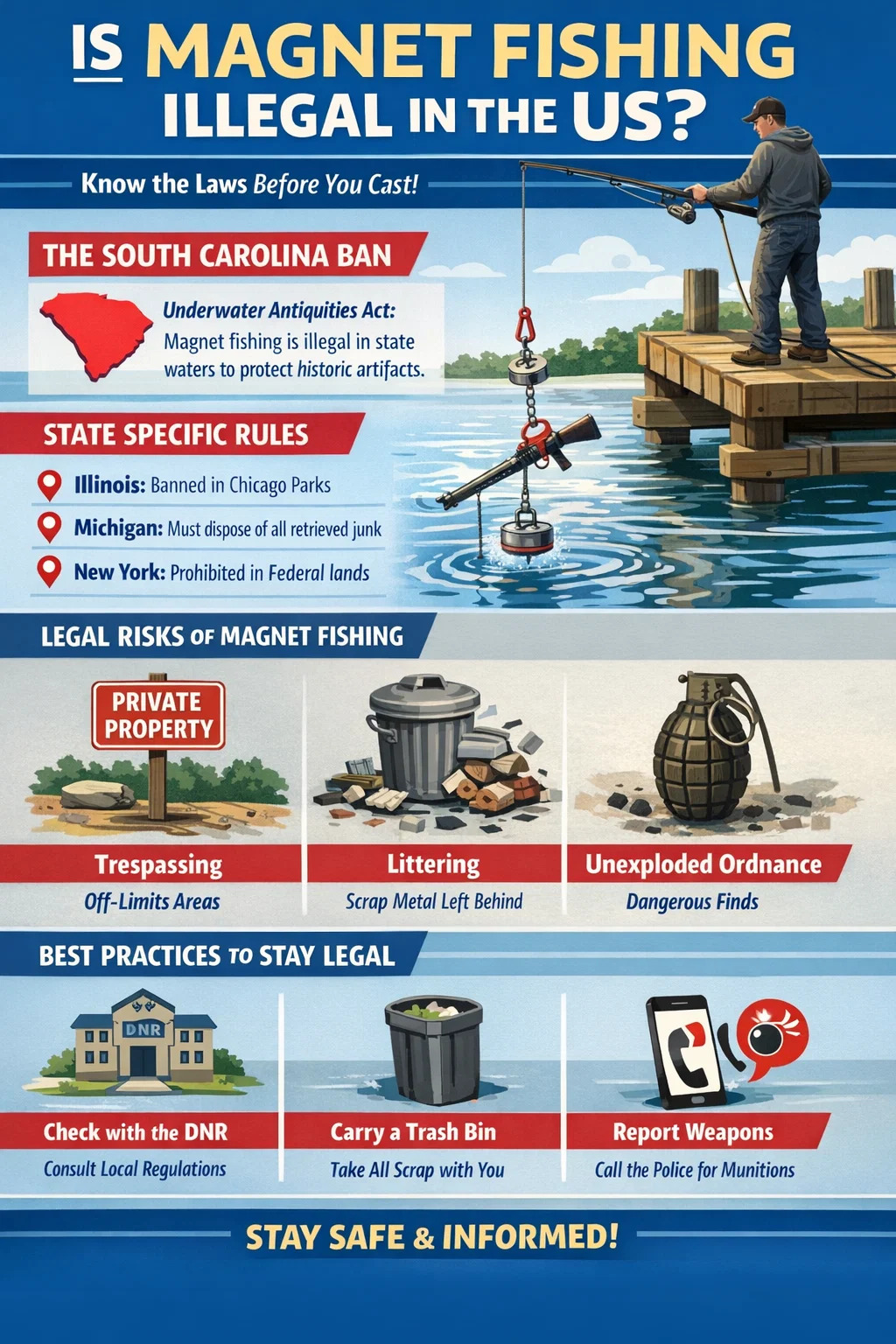
Magnet fishing is not illegal at the federal level in the United States, but it is strictly regulated or outright banned in specific states, cities, and jurisdictions. The most notable ban is in South Carolina, where the Underwater Antiquities Act prohibits the use of a fishing magnet to collect artifacts from state waters. In other states, legality depends on local trespassing laws, environmental protections, and Department of Natural Resources (DNR) mandates.
Specific Legal Restrictions by State
While most enthusiasts can enjoy the hobby freely, certain regions have enacted specific legislation to curb the use of a fishing magnet due to historical preservation or safety concerns.
The South Carolina Ban
South Carolina is the only state with a clear-cut law—the Underwater Antiquities Act—that makes it illegal to disturb submerged artifacts. Because a fishing magnet can pull up historical items like civil war relics, the state classifies this as unauthorized "salvage," which requires a specific license rarely granted to hobbyists.
State-Level Variations
- Illinois: Generally allowed, but strictly prohibited in Chicago city parks and along certain protected shorelines.
- Michigan: The DNR allows it but requires that any metal pulled out (especially junk) must be disposed of properly; leaving it on the bank can result in a littering fine.
- New York: Legal in most public waters, but federal lands like Gateway National Recreation Area prohibit the use of magnetic search tools.
Key Legal Hurdles for Enthusiasts
Even where the act of throwing a fishing magnet isn't specifically banned, practitioners often run into "adjacent" laws that can lead to fines or arrests.
| Legal Issue | Description | Consequence |
|---|---|---|
| Trespassing | Accessing water via private docks or land | Misdemeanor charges |
| Littering | Leaving pulled-up scrap metal on the shore | Fines ($100 - $1,000) |
| Unexploded Ordnance | Pulling up grenades or old munitions | Bomb squad intervention |
Environmental and Historical Preservation Concerns
Disturbing the Sediment
One reason authorities might cite for banning a fishing magnet is the disruption of the riverbed. Heavy magnets can stir up toxins or disturb fish spawning grounds. In states like Washington, where salmon habitats are vital, environmental laws may be used to restrict the hobby.
Historical Artifact Laws
Under the Archaeological Resources Protection Act (ARPA), any item older than 100 years found on federal land belongs to the government. If your fishing magnet attaches to an antique firearm or tool on federal property, removing it can lead to felony charges.
Best Practices to Stay Legal
To ensure you aren't violating local ordinances, follow these constructive guidelines:
- Check with the DNR: Always call the local Department of Natural Resources before heading to a new waterway.
- Carry a Trash Bin: Removing scrap metal is often seen as a community service, but only if you actually take the scrap with you.
- Report Dangerous Finds: If your fishing magnet retrieves a weapon or explosive, leave it in place (if possible) and call the police immediately.