English
 Español
 русский
 日本語
日本語
 عربى
عربى


Content
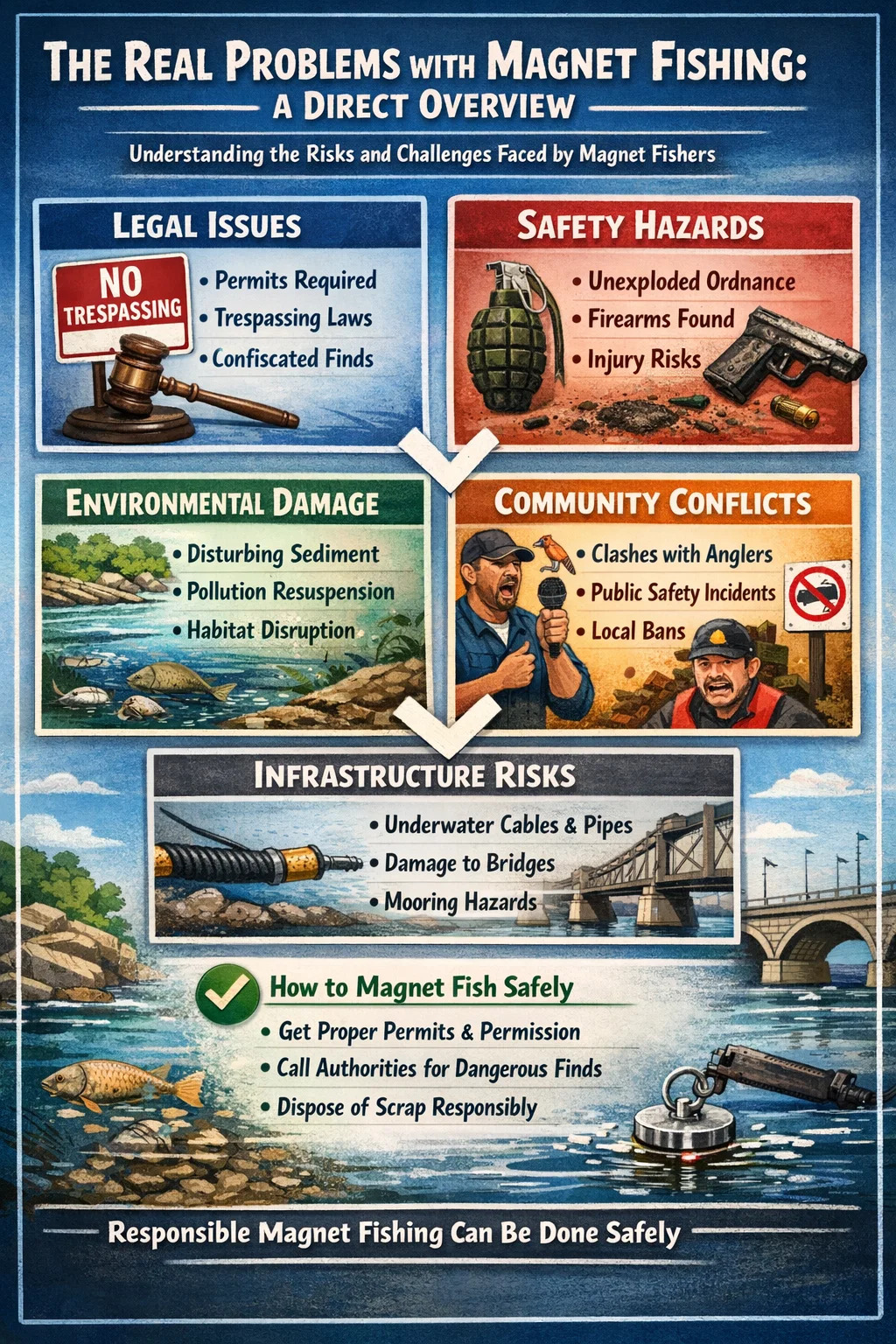
- 1 The Real Problems with Magnet Fishing: A Direct Overview
- 2 The Legal Problems: Permits, Trespassing, and Confiscated Finds
- 3 The Safety Problems: Weapons, Explosives, and Physical Injury
- 4 The Environmental Problems: Disruption, Contamination, and Ecosystem Damage
- 5 The Community and Social Problems: Conflict, Perception, and Bans
- 6 The Problem of Infrastructure Interference
- 7 The Problem of Overconfidence: Misidentifying Dangerous Finds
- 8 Summary of the Main Problems and Their Severity
- 9 How to Reduce the Problems Without Giving Up the Hobby
The Real Problems with Magnet Fishing: A Direct Overview
Magnet fishing has a genuine set of problems — and they are more serious than most beginners expect. The hobby involves dragging a powerful neodymium fishing magnet through rivers, canals, harbors, and lakes to retrieve ferrous metal objects from the water. On the surface it looks like a harmless outdoor activity, and in many ways it is. But the problems that come with it span legal exposure, physical danger, environmental harm, public safety risks, and community conflict. None of these problems are hypothetical — they have all resulted in injuries, arrests, fines, and public bans in multiple countries.
This article works through each major problem category in detail, with real examples and specific data where available, so that both newcomers and experienced hobbyists understand exactly what they are dealing with.
The Legal Problems: Permits, Trespassing, and Confiscated Finds
The single most common problem magnet fishers run into is legal trouble — often because they did not realize a permit or permission was required before they dropped their fishing magnet into the water. The legal landscape varies dramatically by country, region, and even individual waterway, which creates a patchwork of rules that is easy to violate accidentally.
UK: Canal and River Trust Permits
In England and Wales, the Canal and River Trust (CRT) manages over 2,000 miles of canals and rivers. Since 2021, the CRT has required all magnet fishers on its waterways to obtain written permission before using a fishing magnet. This was not a casual recommendation — it followed a sharp increase in the number of dangerous finds, including live grenades and firearms, being pulled up without proper handling procedures. Operating on CRT waterways without permission can result in fines and removal from the site. The application process is free but requires agreement to a code of conduct that includes obligations around dangerous finds.
Beyond CRT waterways, magnet fishing on private land — including riverbanks, canal towpaths owned by private landowners, or privately managed reservoirs — requires separate permission from the landowner. Many popular magnet fishing spots in the UK are technically on private land, and access without permission constitutes trespass.
United States: Federal, State, and Local Rules
In the U.S., there is no single federal rule governing magnet fishing, but several layers of regulation can apply depending on location. National parks, wildlife refuges, and federally protected waterways prohibit the removal of any objects — including metal finds — under statutes like the Archaeological Resources Protection Act (ARPA). State parks frequently have their own regulations. Some states, including South Carolina, have explicitly banned magnet fishing in state waters without a permit, citing concerns about disturbing historical artifacts and waterway ecosystems.
At the municipal level, cities and counties may have their own ordinances. Bridges, piers, and docks in urban areas are often owned or managed by local authorities who have not authorized recreational magnet fishing — meaning a hobbyist dragging a fishing magnet off a city bridge may be violating local ordinance without knowing it.
The Treasure Act and Artifact Laws
In the UK, the Treasure Act 1996 requires that finds of certain metal objects over 300 years old be reported to the local coroner within 14 days. Failure carries a penalty of up to three months in prison or an unlimited fine. While most magnet fishing finds — scrap iron, modern tools, bike frames — do not qualify as treasure, coins and certain older metal objects do. Several magnet fishers have faced legal action for keeping finds that should have been reported.
In the U.S., the National Historic Preservation Act and ARPA impose similar obligations around archaeological objects on federal and tribal lands. The penalties for removing artifacts from those areas run up to $20,000 per violation and two years imprisonment for a first offense.
The Safety Problems: Weapons, Explosives, and Physical Injury
Safety is the most serious category of problems in magnet fishing. The hobby has a documented track record of producing genuinely dangerous finds, and the risks of handling those finds incorrectly are severe.
Unexploded Ordnance
This is the most dangerous problem in magnet fishing, particularly in Europe. Waterways in Belgium, France, Germany, the Netherlands, and the UK contain significant quantities of unexploded ordnance (UXO) from World War I and World War II — grenades, artillery shells, naval mines, and mortar rounds that were disposed of in rivers and canals, or that landed in waterways during combat and were never recovered. Belgian authorities estimated in 2020 that over 350 million kilograms of UXO remain buried across the country, much of it in waterways.
Magnet fishers regularly pull up live grenades and shells. Between 2018 and 2023, UK police were called to deal with magnet-fishing UXO discoveries hundreds of times. The problem is that a corroded, waterlogged grenade can still detonate. In 2019, a magnet fisher in Germany pulled what appeared to be a rusted metal ball from a river — it was a WWI stick grenade that detonated while he was handling it, causing serious hand injuries. The correct action upon finding any suspected ordnance is to back away immediately and call emergency services — not to handle, photograph, or attempt to identify the object.
Firearms
Guns are among the most commonly retrieved significant finds in magnet fishing. Rivers and canals are well-documented disposal routes for criminals wanting to get rid of crime weapons. The problem with finding a gun while magnet fishing is multi-layered: the weapon may be loaded, corrosion may have compromised the firing mechanism in unpredictable ways, and the serial number may have been obliterated — making possession of the weapon a federal felony in the U.S. under 18 U.S.C. § 922(k), regardless of how you came to have it.
Modern centerfire ammunition can remain functional after extended water submersion. A corroded trigger mechanism combined with a live round in the chamber is a combination that has injured hobbyists who attempted to handle, clear, or transport found firearms without professional assistance.
Sharp Metal, Cuts, and Tetanus
Even routine magnet fishing finds present physical hazards. Corroded metal edges are sharper than they appear, and cuts from rusty submerged metal carry a real risk of tetanus infection. Medical professionals routinely remind hobbyists that tetanus vaccinations should be current before handling recovered scrap metal. Cuts from waterway metal also carry risk of infection from waterborne bacteria — rivers and canals in urban areas frequently contain elevated levels of E. coli and other pathogens.
The Fishing Magnet Itself
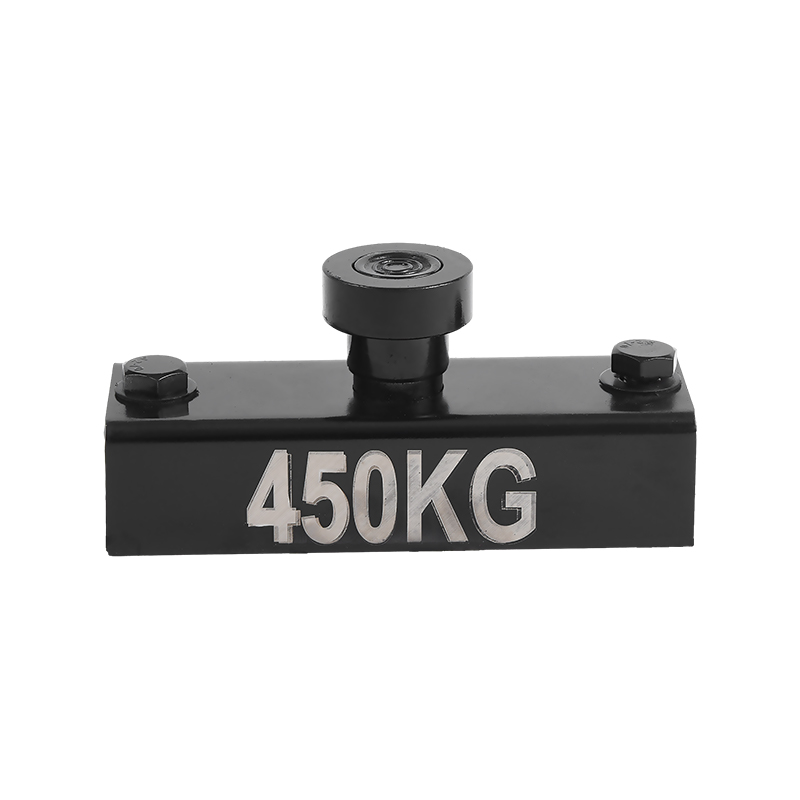
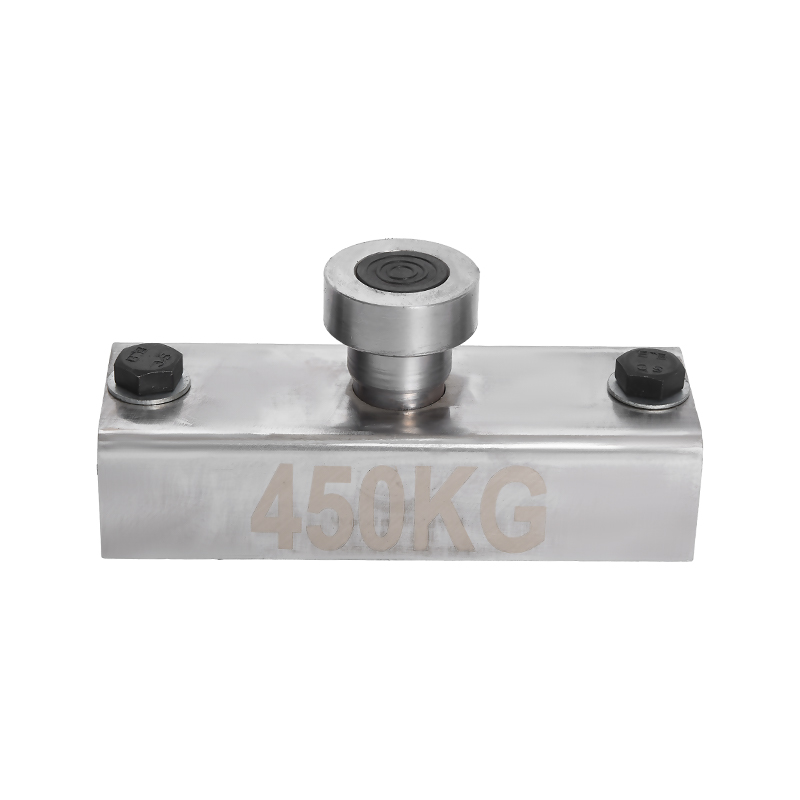
Neodymium fishing magnets are not toys. A 1,000 lb pull fishing magnet can cause severe crush injuries if a hand or finger becomes trapped between the magnet and a steel surface — and this can happen suddenly and without warning when the magnet snaps to a large submerged metal object. There are documented cases of broken fingers and lacerations caused by magnet-to-metal snap events. Heavy-duty fishing magnets (1,500 lb pull and above) require specific handling techniques to use safely.
The rope and knot securing the fishing magnet is another failure point. A fishing magnet that breaks free from its rope while loaded with a heavy find can fall back into the water or swing outward — both scenarios that have caused injuries to bystanders and hobbyists alike.
The Environmental Problems: Disruption, Contamination, and Ecosystem Damage
Environmental concerns around magnet fishing are frequently underestimated by hobbyists but taken seriously by ecologists, waterway management bodies, and local authorities. The environmental problems fall into several distinct areas.
Sediment Disturbance
Dragging a fishing magnet along the bottom of a waterway disturbs sediment. In many rivers and canals, this sediment contains decades of accumulated pollutants — heavy metals, industrial chemicals, agricultural runoff, and other contaminants that have settled and become biologically inert over time. Disturbing that sediment resuspends those pollutants into the water column, where they can affect aquatic organisms and travel downstream. This is a recognized problem in waterway management; dredging operations are subject to environmental impact assessments precisely for this reason. Frequent magnet fishing in the same waterway section causes repeated disturbance of the same sediment zones.
Disruption of Aquatic Habitat
Submerged metal objects, however unsightly they appear, frequently become part of the aquatic habitat over time. Abandoned shopping trolleys, bikes, and metal debris are colonized by invertebrates, algae, and small fish that use them as shelter or feeding structures. Removing these objects can eliminate microhabitats that local species depend on. This does not mean submerged junk should be left indefinitely — but it does mean that the environmental picture is more nuanced than "removing rubbish is always good."
Improper Disposal of Retrieved Metal
A problem specific to less responsible hobbyists: retrieved scrap metal is sometimes left on the bank or dumped back in the water. Leaving corroded metal on a riverbank is littering. Dumping it back constitutes illegal disposal under waterway protection laws in most jurisdictions. Responsible magnet fishing requires taking all retrieved material to appropriate recycling or disposal facilities — which adds effort and cost that not all hobbyists are willing to invest.
Riverbank Erosion
Repeated use of the same bank location — which is common on popular magnet fishing spots — contributes to bank erosion. Hobbyists dragging heavy objects up riverbanks dislodge vegetation, compact soil, and destabilize the bank edge over time. In narrow canals and managed waterways, bank integrity is carefully maintained, and repeated disturbance from magnet fishing activity accelerates degradation.
The Community and Social Problems: Conflict, Perception, and Bans
Magnet fishing creates friction with other waterway users, local residents, and authorities — and this friction has resulted in bans, restrictions, and negative press coverage that affects the entire hobby community.
Conflict with Anglers
Traditional rod fishing and magnet fishing frequently compete for the same waterway access points. Anglers report that magnet fishers disturb the water, scare fish, and take up prime bank positions. In some areas, angling clubs have successfully lobbied local authorities to restrict magnet fishing on stretches they manage, citing disturbance to fishing conditions. This conflict is particularly acute on small rivers and canals where good fishing spots are limited.
Public Safety Incidents Triggering Bans
High-profile public safety incidents involving magnet-fishing finds have directly led to local bans. When a hobbyist in Birmingham pulled a loaded handgun from a canal in 2020 and posted about it on social media without immediately calling police, the resulting coverage led the local authority to introduce restrictions on magnet fishing in that area. Similar incidents in France and Germany — particularly involving live grenades being recovered and mishandled — have prompted regional authorities to introduce permit requirements or outright bans.
The actions of a minority of irresponsible hobbyists consistently generate restrictions that affect the entire community. This is one of the most frustrating problems for experienced, responsible magnet fishers who follow all proper protocols.
Vandalism and Bridge Damage
A specific problem that has attracted attention from infrastructure managers: powerful fishing magnets dragged along or near bridge supports can damage protective coatings on steel structural elements. Bridges rely on those coatings to prevent corrosion of load-bearing steel. Several UK canal trusts and local councils have cited magnet fishing-related coating damage on historic bridges as a reason for introducing access restrictions. This is a problem that most hobbyists are entirely unaware of, but it creates real long-term infrastructure costs.
Negative Media Coverage
Magnet fishing generates a disproportionate share of negative media coverage relative to its actual size as a hobby. Stories about found grenades, loaded firearms, and hobbyists handling dangerous ordnance attract significant attention and shape public and regulatory perception of the activity. This coverage affects the willingness of local authorities to grant access permissions and creates a reputational problem for the hobby that organized magnet fishing communities actively work to counteract.
The Problem of Infrastructure Interference
Beyond bridge coatings, magnet fishing creates interference problems with underwater infrastructure that most hobbyists never consider.
Underwater Cables and Pipelines
Many waterways contain submerged utilities — power cables, telecommunications lines, water pipes, and gas pipes. A powerful fishing magnet dragged along the bottom can catch on cable housings, and a hobbyist pulling hard to retrieve what they think is stuck scrap metal may actually be pulling on a live utility line. Damage to submerged power cables can cause electrocution hazards in the water. Damage to gas or water pipelines can trigger service outages and significant repair costs. Utility companies in the UK and U.S. have issued specific warnings about magnet fishing near marked utility crossing points.
Boat Anchor Chains and Mooring Equipment
In harbors and marinas, fishing magnets frequently attach to anchor chains, mooring rings, and the metal hulls of moored boats. Pulling on a boat's anchor chain from an unexpected angle can shift the vessel or damage the anchor mechanism. This has created conflicts between magnet fishers and boat owners in coastal and riverside marina areas, and some marinas have explicitly prohibited magnet fishing within their boundaries.
The Problem of Overconfidence: Misidentifying Dangerous Finds
One of the most consistent problems documented in magnet fishing communities is hobbyists — particularly newer ones — confidently misidentifying what they have found. The hobby attracts people who enjoy the discovery aspect, and that enthusiasm can override caution when something unusual comes up on the fishing magnet.
Common misidentification problems include:
- Identifying a live grenade as an inert training device or "just a rusty ball" and handling it accordingly
- Assuming a firearm is unloaded because it is corroded, and attempting to check the chamber
- Identifying a corroded artillery shell as scrap pipe or tubing
- Treating a sealed metal container (which could contain hazardous chemicals) as just a metal box
- Assuming that because an object looks old and rusted, it is no longer functional or dangerous
Corrosion does not render ordnance safe. A WWI grenade recovered from a river in Belgium in 2021 detonated in a hobbyist's garage after being brought home and left to dry. The hobbyist survived but sustained serious injuries. The scenario played out because he assumed that 100 years of submersion had made the object inert.
Summary of the Main Problems and Their Severity
| Problem Category | Severity | Who Is Affected | Most Common Outcome if Ignored |
|---|---|---|---|
| UXO and explosives | Extreme | Hobbyist, bystanders | Serious injury or death |
| Firearms possession laws | High | Hobbyist | Criminal charges, fines, imprisonment |
| Permit and access violations | Medium–High | Hobbyist | Fines, equipment confiscation |
| Physical injury from magnet | Medium | Hobbyist | Crush injuries, lacerations |
| Environmental disruption | Medium | Waterway ecosystem | Sediment pollution, habitat loss |
| Infrastructure damage | Medium | Utilities, bridges, boats | Repair costs, service disruption |
| Community conflict and bans | Medium | Hobby community | Access restrictions, site bans |
How to Reduce the Problems Without Giving Up the Hobby
The problems associated with magnet fishing are real but manageable. The hobbyists who run into serious trouble are overwhelmingly those who did not prepare properly before going out. The following practices address the main risk categories directly.
Before You Go Out
- Research who owns or manages the waterway you plan to fish — local authority, Canal and River Trust, private landowner, or federal agency — and confirm you have the right to be there
- Check whether the area has a history of UXO — old industrial areas, former military zones, and river crossing points near WWII infrastructure are higher risk
- Save the local non-emergency police number and know the emergency number for your country
- Ensure your tetanus vaccination is current
- Bring heavy gloves, a first aid kit, and a plan for how to dispose of retrieved scrap
When You Find Something Suspicious
- If it looks like a weapon or ordnance, treat it as live and dangerous — do not attempt to identify it further by handling it
- Back away from the object and keep others clear
- Call police or emergency services immediately — in the UK call 999, in the U.S. call 911 or local non-emergency dispatch
- Note your GPS location and stay at the scene until authorities arrive
- Do not post to social media before the handover is complete
After the Session
- Take all retrieved metal to a recycling facility or approved scrap metal disposal point — never leave it on the bank or throw it back
- Inspect your fishing magnet, rope, and knot connections for wear before the next outing
- Report any infrastructure damage (bridge coating scrapes, disturbed utility markers) to the relevant authority
The hobbyists who follow these practices consistently avoid the problems that make headlines and end up in police reports. Magnet fishing done responsibly has genuine public benefits — weapons removed from waterways, scrap cleared, and public safety supported. The problems are real, but they are largely the product of preparation failures rather than inherent flaws in the hobby itself.