English
 Español
 русский
 日本語
日本語
 عربى
عربى


Content
- 1 What Counts as a Mould for Precast Concrete?
- 2 Five Design Principles That Decide Mould Performance
- 3 Magnetic Fixing: The Upgrade That Changes Mould Handling
- 4 Lifting Anchors, Chamfers and Inserts Complete the Mould
- 5 Common Defects That Start at the Mould (and How to Prevent Them)
- 6 Mould and Magnet Maintenance That Keeps Production Stable
- 7 Frequently Asked Questions About Moulds for Precast Concrete
- 7.1 What is the difference between a mould and formwork in precast concrete?
- 7.2 How many casting cycles can a steel precast mould deliver?
- 7.3 Why do precast plants use magnetic fixing instead of bolts?
- 7.4 Do shuttering magnets lose their holding force over time?
- 7.5 Can lifting anchors and chamfer strips be added to any mould geometry?
- 7.6 How do I stop concrete from sticking to the mould?
- 8 The Bottom Line
A precast plant in Zhejiang was losing roughly two production hours every morning. Crews realigned steel side forms, drilled fresh holes in the casting pallet and ground down ledges where mortar had leaked through worn joints. None of that was a concrete problem; it was a tooling problem. In precast concrete, the mould controls dimensional accuracy, daily cycle count, surface finish and the cost of every panel loaded on a truck. Plants that treat moulds as precision equipment rather than consumables consistently record fewer rejects, faster turnaround and lower rework spending. This guide explains what moulds for precast concrete need to deliver, why magnetic fixing has become the standard on modern pallet lines, and how small design choices such as chamfers, anchors, inserts and maintenance routines change the economics of every pour.
What Counts as a Mould for Precast Concrete?
A mould is the rigid cavity that shapes wet concrete until it hardens, and in a precast plant that cavity is usually a fabricated steel assembly used every day. The term covers the base pallet, side forms, end gates, chamfer strips, lifting anchors and any insert that creates an opening or recess. In practice, mould and formwork are used almost interchangeably, although formwork is the wider term that includes temporary support structures on a construction site. In this guide, "mould" means the complete, reusable tooling used to precast concrete elements.
Start from a firm conclusion: the mould transfers its own accuracy, stiffness and surface condition to every element it produces. A bowed pallet creates an out-of-tolerance slab. A scratched forming face creates a surface that requires grinding. A loose side form creates fins that must be chipped off after demoulding, adding labour and damaging edges. Producers who inspect moulds before every shift and repair small defects immediately avoid the much larger cost of reworking concrete later.
The mould family you choose depends on the element type and the daily output target. Most plants combine several mould types on the same floor, and the selection directly affects how many panels can move through the curing and stripping sequence.
| Mould family | Typical element | Typical material | Planning output |
|---|---|---|---|
| Static pallet | Wall panels, floor slabs | Carbon or stainless steel face plate | 1 cycle per day typical |
| Battery mould | Multiple wall slabs in one batch | Vertical steel frames pressed together | Up to 8-12 slabs per battery per day |
| Carousel line | Slabs on circulating steel pallets | Steel pallets moving along a loop | 1-2 cycles per day with heated chamber |
| Individual closed mould | Columns, beams, stairs | Steel or steel plus polymer liner | 1 cycle every 1-2 days |
| Disposable former | Voids, niches, openings | Expanded polystyrene or timber | Single use |
Output figures in the table assume normal curing conditions. Plants that use heated pallets, curing chambers or high-early-strength mixes can push cycle counts higher. The mould capacity must be matched to the curing strategy, not the other way around.
Five Design Principles That Decide Mould Performance
Every well-performing precast mould follows the same logic. It must be stiff enough not to deflect under vibration, accurate enough to assemble without shimming, and smooth enough to release concrete cleanly. The five principles below apply equally to a small stair mould and a 12-metre wall panel line.
Principle 1. Stiffness Comes Before Strength
A mould rarely breaks; it deflects. The failure appears as a bowed flange, a sagging panel or a step at a joint. Ribs and stiffeners are spaced so that deflection stays below the tolerance of the finished element. As a planning rule, visible faces are held within roughly 1-2 mm over a 2-metre span, and longer elements need proportionally stiffer framing rather than simply a thicker face plate.
Principle 2. Joints Must Stay Closed Under Vibration
Vibrated concrete behaves like a dense liquid, so it will find any gap in a mould. When side forms are fixed with a few bolts, the pressure concentrates at those points and the form can lift between fixings, letting mortar bleed out. Magnetic fixing pulls the side form down along its whole length, spreading the clamping force and keeping joint lines closed during the heaviest vibration. Because the magnet does not require drilled holes, layouts can be changed without damaging the pallet.
Principle 3. Release and Demoulding Are Designed In
A sharp undercut locks the element into the mould. Adding a chamfer or a taper at the bottom edge prevents this and makes demoulding predictable. Precast chamfer strips also protect panel edges during turnover; chipped corners are one of the most common reasons for panels being rejected after stripping.
Principle 4. The Forming Face Sets the Surface Quality
Concrete reproduces the forming face in detail. Polished steel gives smooth architectural finishes; plywood gives a soft matt texture; elastomer liners create decorative patterns. For daily production, steel with a weld-free polished face is the most predictable surface. In humid coastal plants or exposed architectural work, stainless steel faces avoid rust stains that can ruin an otherwise good panel.
Principle 5. Durability Is a Maintenance Plan
Durability is the result of maintenance habits, not only material grade. A plain carbon steel mould with a scheduled cleaning routine will outlast an expensive mould that is ignored. When comparing forming materials, evaluate life-cycle cost: purchase price, maintenance hours, repair frequency and how many acceptable panels the mould produces between repairs.
| Forming surface | Typical life span | Cast finish | Best suited for | Main limitation |
|---|---|---|---|---|
| Structural carbon steel plate | 500-2,000+ cycles with maintenance | Smooth, can be polished | General wall and slab moulds | Needs rust protection |
| Stainless steel plate | 2,000+ cycles with proper care | Smooth, stain-resistant | Architectural surfaces, humid environments | Higher initial cost |
| Plywood / multiplex | 20-50 cycles | Matt, depends on coating | Low-volume runs, prototypes | Moisture limits durability |
| Elastomer / polymer liner | 100-300 cycles over rigid backing | Textured or patterned | Architectural, exposed aggregate | Needs careful handling and release agent |
These are planning ranges, not guarantees. Concrete abrasiveness, curing temperature, release agent choice and cleaning method all shift the real life span in either direction.
Magnetic Fixing: The Upgrade That Changes Mould Handling
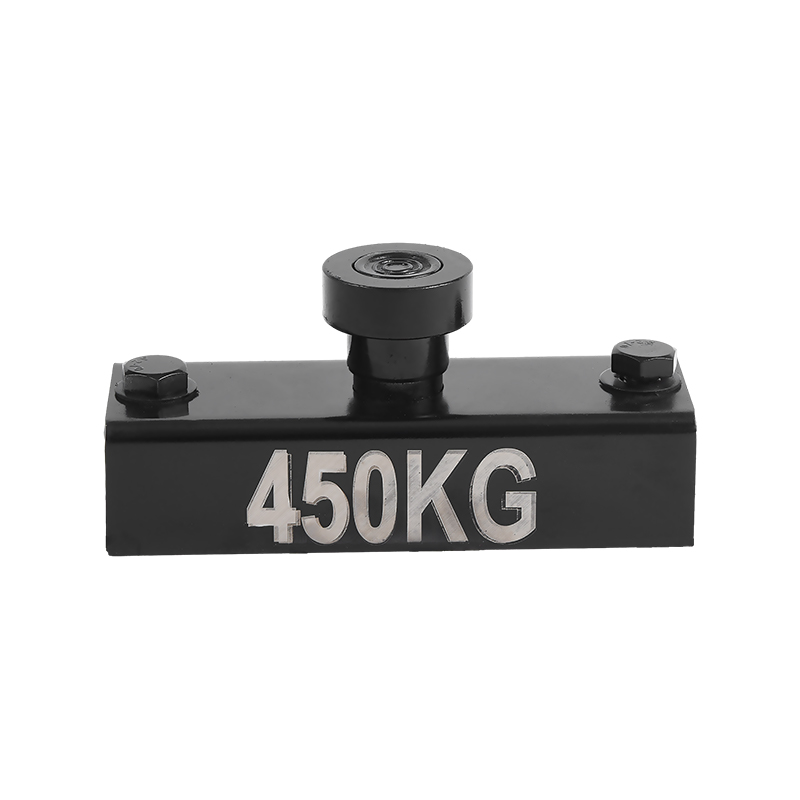
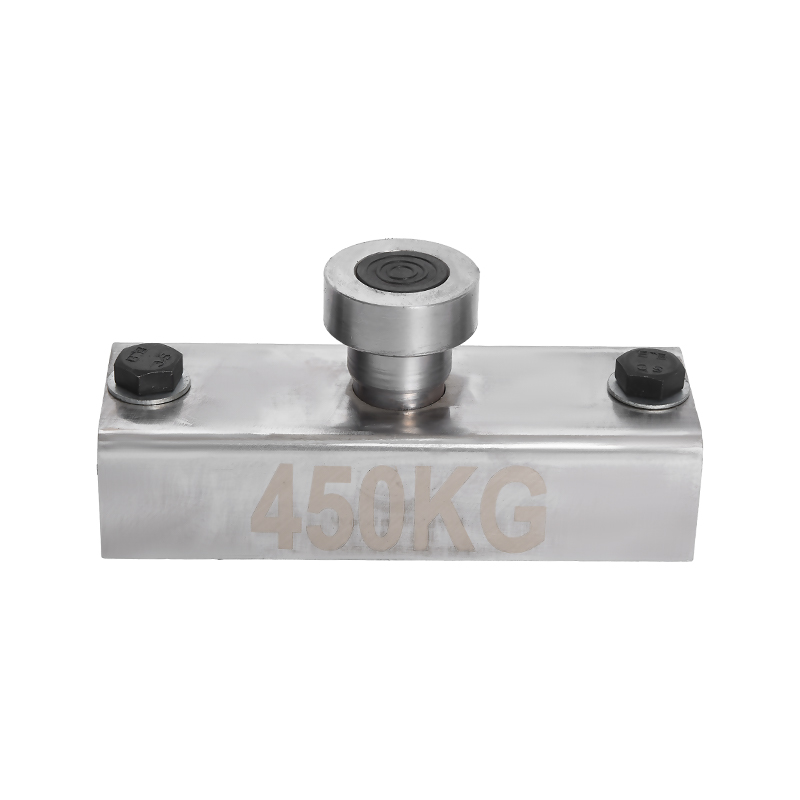
Magnetic fixing is the fastest-return upgrade available for precast pallet moulds. A shuttering magnet holds a steel side form or gate firmly against a steel pallet without any bolt, weld or clamp. You place the form, activate the magnet, pour, deactivate and relocate the form for the next element. Setup time drops from tens of minutes to a few minutes, and the pallet surface stays intact.
Each unit contains a neodymium or ferrite magnet inside a steel housing. The operator activates or deactivates it with a handle, a lever or a removable key depending on the design. Holding force depends on three variables: the thickness of the steel pallet, the flatness and cleanliness of the contact face, and the size of the magnet housing. Typical industrial shuttering magnets cover a working range from roughly 100 kg to more than 1,000 kg of rated holding force, and most suppliers rate the value at 20 mm steel plate with a clean, flat contact face.
Practical rule from the shop floor: if a side form creeps or vibrates during the pour, the magnet is probably under-sized for the plate thickness, the pallet is thinner than 10 mm, or the contact face is dirty. Always confirm pallet thickness before choosing magnet capacity.
The economics of magnetic fixing are visible in every cycle. In a typical panel plant, a crew of two can change a bolted side form in 30 minutes including drilling and alignment. With magnetic fixing, the same job often takes less than 5 minutes. Over a ten-pour day, the saving is several hours of direct labour, and the pallet itself remains flat and reusable for years instead of being drilled and patched.
- No pallet drilling: the forming surface stays intact for any future layout.
- Fast repositioning: a magnet moves in one to three minutes without tools.
- Distributed clamping: holding force acts along the form, not at isolated bolt points.
- Less pallet damage: no weld scars, stripped threads or hairline cracks around old holes.
- Long service life: quality magnets serve hundreds of pours, and the reusability of shuttering magnets is often the deciding factor between a bolt-based and a magnet-based line.
| Fastening method | Typical setup time | Pallet condition | Repositioning | Common risk |
|---|---|---|---|---|
| Through-bolts | 15-30 min per side form | Drilled and welded | Slow, rework when layout changes | Stripped threads, cracked edges |
| Welded brackets | 10-15 min per weld point | Weld scars and grinding marks | Difficult, requires re-cutting | Distortion and corrosion pockets |
| Magnetic fixing | 1-3 min per magnet | Undamaged, reconfigurable | Seconds per magnet | Holding force drops if plate dirty or thin |
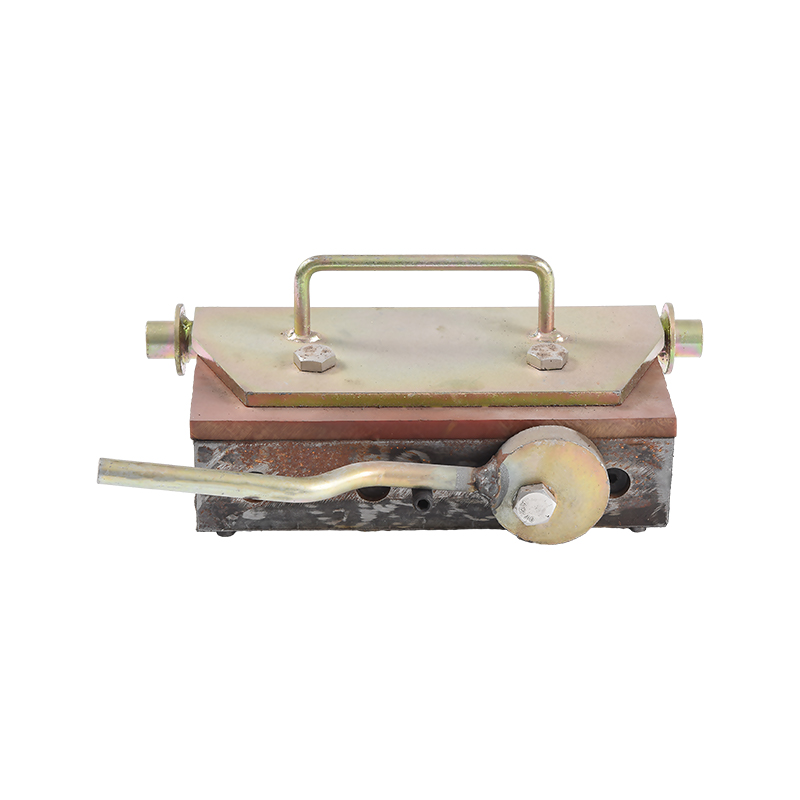
For heavier side forms and deep edges, a lever-operated shuttering magnet box provides a stable way to build and strike formwork in seconds. The lever multiplies the operator's effort and locks the magnetic circuit in place; the lever principle behind these boxes is explained in detail in our technical article. Nothing else in a precast mould changes layout speed as much as the fixing method.
Among the most practical designs for daily production is the shuttering magnet with handle, because it combines lifting, carrying and switching in one grip. This matters when a line produces several element types in a shift and crews handle side forms continuously. Many yards keep a mixed stock: handled magnets for frequent moves and lever box magnets for long, heavy side gates.
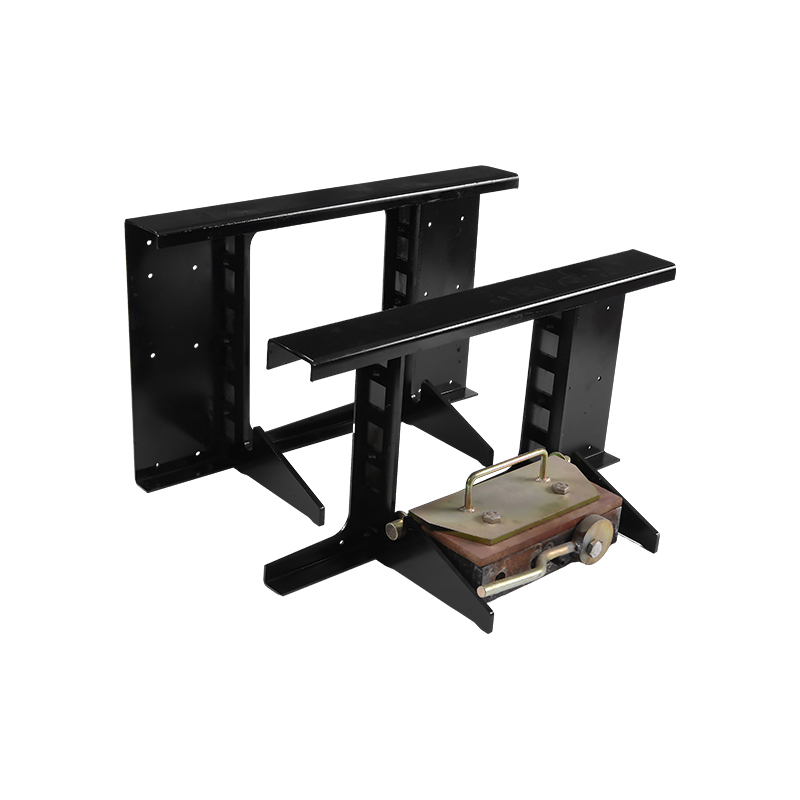 Custom Shuttering magnet with handle Suppliers, OEM/ODM Factory - Ningbo Wewin MAs China OEM/ODM Shuttering magnet with handle suppliers and Shuttering magnet with handle factory, Ningbo Wewin Magnetics Co., Ltd speci...View Product →
The casting environment also matters. For humid yards and outdoor storage, stainless steel magnetic boxes resist corrosion on the housing and keep the unit sliding against the pallet; carbon steel magnetic boxes are an economical choice for indoor casting beds that remain dry.
Lifting Anchors, Chamfers and Inserts Complete the Mould
The mould does not stop at the forming face. Demoulding, edge protection and recess positioning are all mould jobs. Three accessory families deserve attention in every mould specification, because they define how the element leaves the mould and how it survives the first minutes of handling.
Lifting Anchors and Connection Points
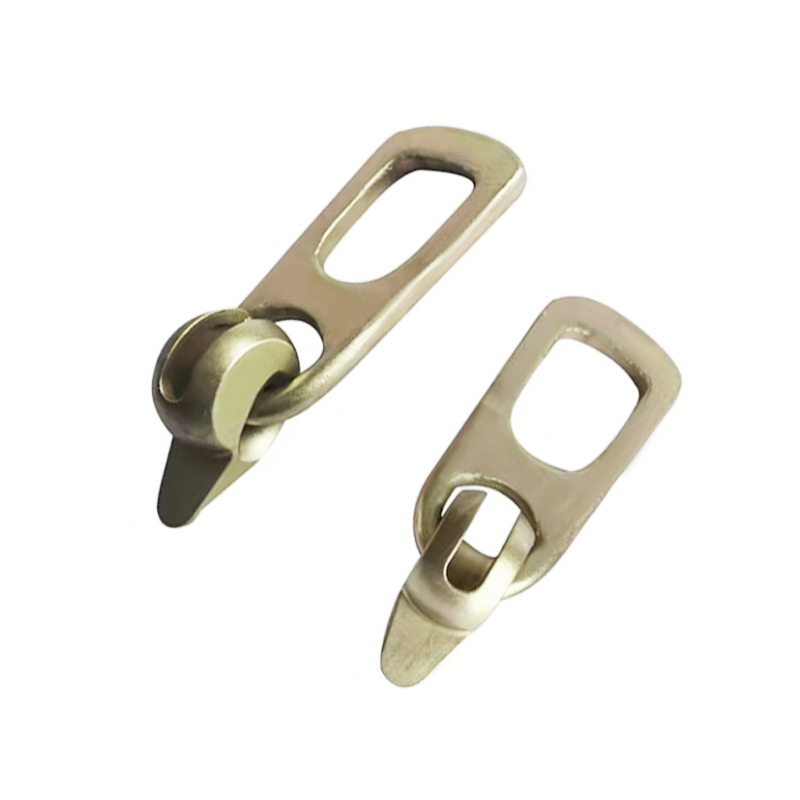
An erection anchor is cast into the element inside the mould and later engaged by an automatic lifting clutch or a crane hook. Correct positioning is not optional: the anchor becomes the only safe lifting point for a heavy panel. Anchor templates hold the anchor at the exact height and angle while concrete is compacted around it, and the anchor geometry must be matched to panel weight, edge distance and concrete strength at turnover. The erection anchors used in precast lifting systems are available in capacities suited to different element weights and can be combined with two-hole anchors where a second lifting point is needed.
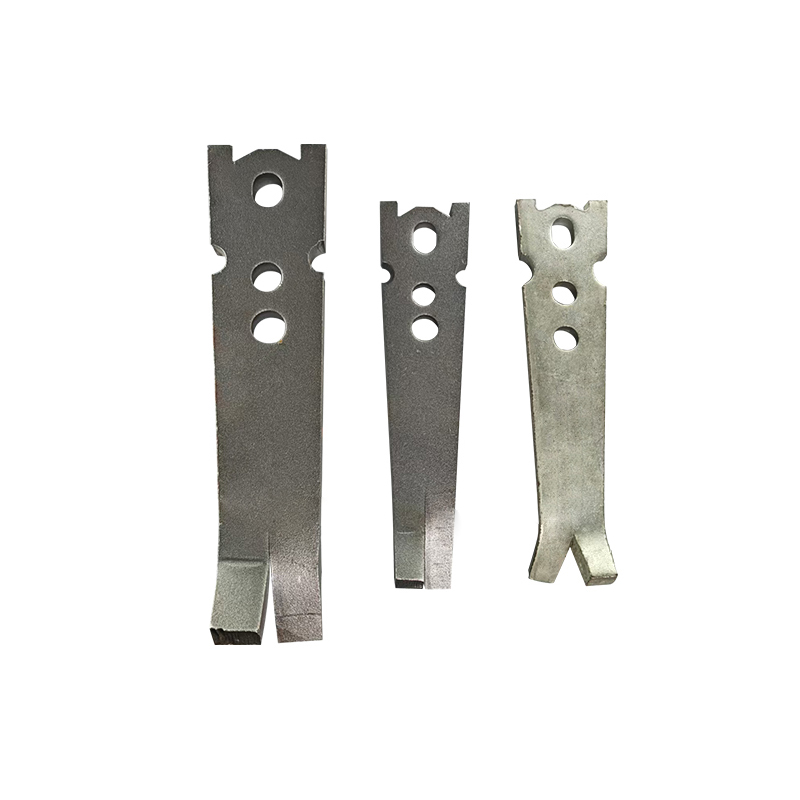 Custom Erection Anchor Suppliers, OEM/ODM Factory - Ningbo Wewin Magnetics Co., As China OEM/ODM Erection Anchor suppliers and Erection Anchor factory, Ningbo Wewin Magnetics Co., Ltd specialize in custom Erection Anc...View Product →
Chamfers and Edge Formers
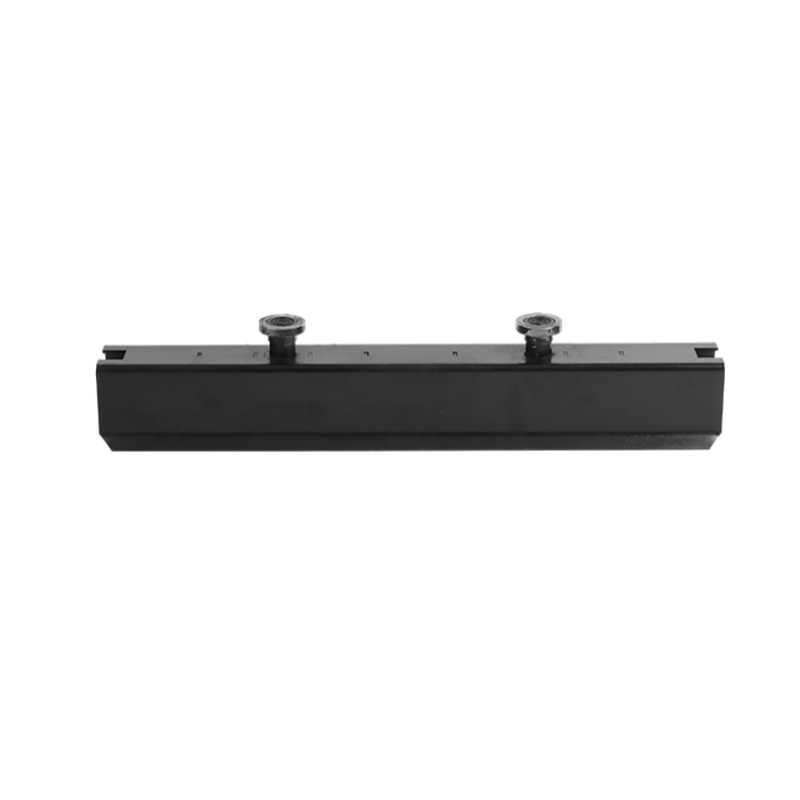
A chamfer is a bevel cut from the sharp corner of the element. Casting a chamfer reduces stress concentrations at the edge, prevents spalling during turnover and produces a cleaner architectural line. On the mould side, precast concrete chamfer strips are pressed into the inside corner of the form before casting; after demoulding they leave a uniform bevel. Common chamfer sizes in the industry are 10 x 10 mm, 15 x 15 mm and 20 x 20 mm, selected by panel thickness and structural detail.
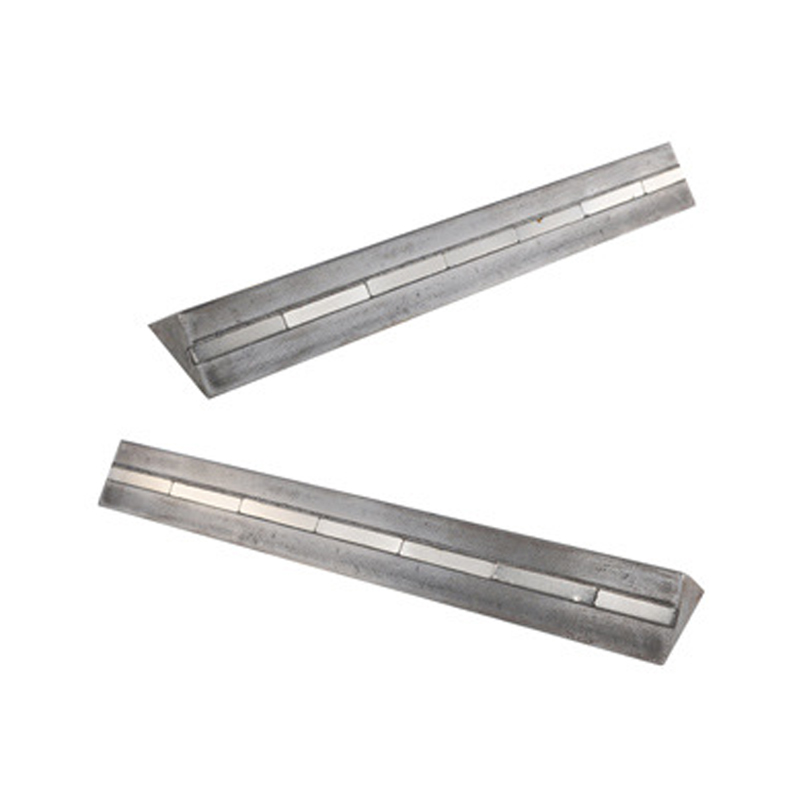 Custom Precast concrete chamfer Suppliers, OEM/ODM Factory - Ningbo Wewin MagnetAs China OEM/ODM Precast concrete chamfer suppliers and Precast concrete chamfer factory, Ningbo Wewin Magnetics Co., Ltd specialize in c...View Product →
Inserts, Sockets and Magnetic Positioning
Openings, recesses, threaded sockets and connection plates must all be fixed inside the mould before concrete placement. Insert magnets hold steel inserts and small chamfers in place so vibration cannot move them. A separate explanation of insert magnets and their role in precast concrete production shows how these small components prevent the most frequent positioning defects, such as tilted sockets and misplaced plates.
A complete mould accessory list usually includes:
- Chamfer strips for beveled edges and spall protection.
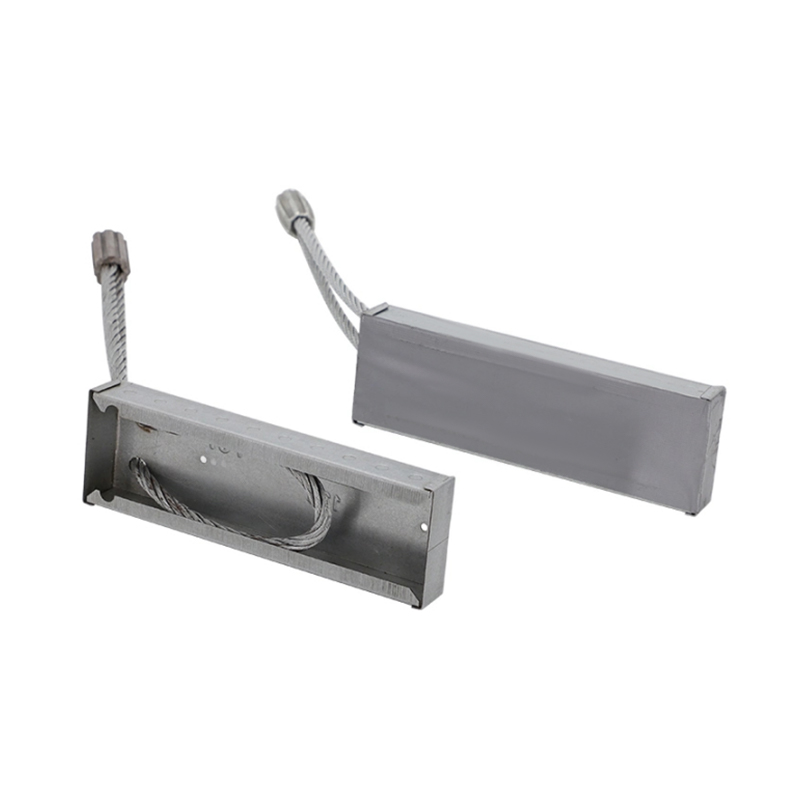
- Wire rope connection boxes for cast-in transport loops.
- Lifting clutches that engage anchors cleanly on automatic lines.
- Magnetic edge touch units for forming openings and cut-outs.
- Insert magnets for holding sockets, plates and profile inserts.
Design the full accessory set before building the mould, not after the first trial pour. Retrofitting anchors and chamfers later usually means cutting into the forming face, which damages the pallet surface you are trying to protect.
Common Defects That Start at the Mould (and How to Prevent Them)
Most visible defects on precast panels start at the mould, and they show up at exactly the same position on every pour until the mould is corrected. If a defect repeats four times in a row, change the mould before changing the mix.
| Defect | Most likely mould cause | Mould-side correction |
|---|---|---|
| Honeycomb at edges | Open joints, lost mortar through gaps | Increase magnetic clamping, seal joint lines, verify plate flatness |
| Steps and misalignment | Weak side form stiffness, shifting during pour | Stiffen frame, add magnets at closer spacing, check form squareness |
| Edge spalling | No chamfer, sticking surface | Add chamfer strips, apply release agent, ensure curing strength |
| Sticking and drag marks | Rough forming face, missing release agent | Polish face, verify release agent coverage, avoid under-curing |
| Rust stains on surface | Corrosion of carbon steel face plate | Switch to stainless steel face or maintain rust protection |
| Misplaced inserts | Insert not fixed in the mould | Use insert magnets or anchor templates |
Chasing mould-related defects with concrete adjustments is expensive and rarely works. A leaking joint will not be stopped by a drier mix, and a bowed pallet will not be corrected by more vibration. Fix the mould first; then, only if the defect remains, evaluate the concrete side.
Mould and Magnet Maintenance That Keeps Production Stable
A clean mould is faster, safer and more predictable than a dirty one. The routine below takes a few minutes per cycle and protects the two most expensive assets on the line: the forming face and the magnetic fixing units.
- Wash or air-blow the forming face after every pour so no dried mortar remains in corners.
- Check chamfer strips and rubber edge seals for dents and wear before the next assembly.
- Keep the pallet surface clean and flat at every magnet contact point; even a thin layer of slurry reduces holding force.
- Remove weld spatter from pallets and forms immediately; spatter creates local high spots and scratches the forming face.
- Store magnets on a steel keeper plate when not mounted, keeping the magnetic circuit stable and the contact face clean.
- Pull-test magnets periodically to confirm rated holding force on the actual pallet thickness.
- Rust-treat carbon steel pallets weekly in humid environments.
Release agent build-up is a common cause of mottled surfaces. A grey film forms on the forming face after many pours and transfers unevenly to the concrete; the panel then looks stained even though the mix is unchanged. Periodic deep cleaning of the face with a degreaser or an appropriate solvent such as alcohol keeps the surface uniform. The same cleaning logic applies to magnet faces, where a thin layer of slurry reduces holding force more than most operators expect.
Frequently Asked Questions About Moulds for Precast Concrete
What is the difference between a mould and formwork in precast concrete?
Formwork is the broad term for the structure that contains fresh concrete. A mould is the final, detail-complete assembly that gives the element its finished shape. In a precast factory, the mould includes the pallet, side forms, chamfers, anchors and magnets.
How many casting cycles can a steel precast mould deliver?
With regular cleaning and rust protection, structural steel forming faces commonly deliver 500 to more than 2,000 cycles, while stainless steel faces can go beyond that figure. Plywood forms are usually limited to 20-50 cycles. These are planning ranges; actual life depends on mix abrasiveness and maintenance quality.
Why do precast plants use magnetic fixing instead of bolts?
Magnetic fixing removes drilling and welding from the pallet, cuts setup time from tens of minutes to a few minutes, and keeps the holding force distributed along the form. It also makes repositioning possible between pours, which is essential on flexible lines that cast several element types in one day.
Do shuttering magnets lose their holding force over time?
They do not lose significant strength in normal use as long as the magnetic circuit is protected. What changes is the working condition: a rusty pallet, an air gap or a damaged housing can reduce effective holding force. Storing magnets on a keeper plate and pull-testing periodically keeps performance predictable.
Can lifting anchors and chamfer strips be added to any mould geometry?
Yes. Anchors are positioned with templates or insert magnets before concrete placement, and chamfer strips are fixed to the inside corner of side forms with magnets, screws or pressure-fit profiles. The only requirement is that the anchor or chamfer does not conflict with the demoulding path.
How do I stop concrete from sticking to the mould?
Apply release agent correctly before every pour, keep the forming face smooth and clean, use chamfers on lower edges, and wait until the concrete reaches adequate strength before turning or demoulding. If sticking continues, check for mechanical undercuts and rough welds inside the mould.
The Bottom Line
Moulds for precast concrete are where production economics are decided. A stiff steel mould with clean joints, magnetic fixing, correctly positioned lifting anchors and chamfered edges removes the three most expensive wastes in precast yards: setup time, rework and pallet damage.
Start by auditing the mould as a complete assembly rather than a steel box. Then upgrade the fastening method first, because magnetic fixing is the fastest-return improvement on most pallet lines: it touches every pour of every day.
If you are planning a new line or rebuilding existing formwork, compare total cycle cost rather than purchase price. The mould that pays for itself is the one that produces a compliant panel on the first attempt, releases it without damage and is ready for the next pour within minutes.