English
 Español
 русский
 日本語
日本語
 عربى
عربى

Content
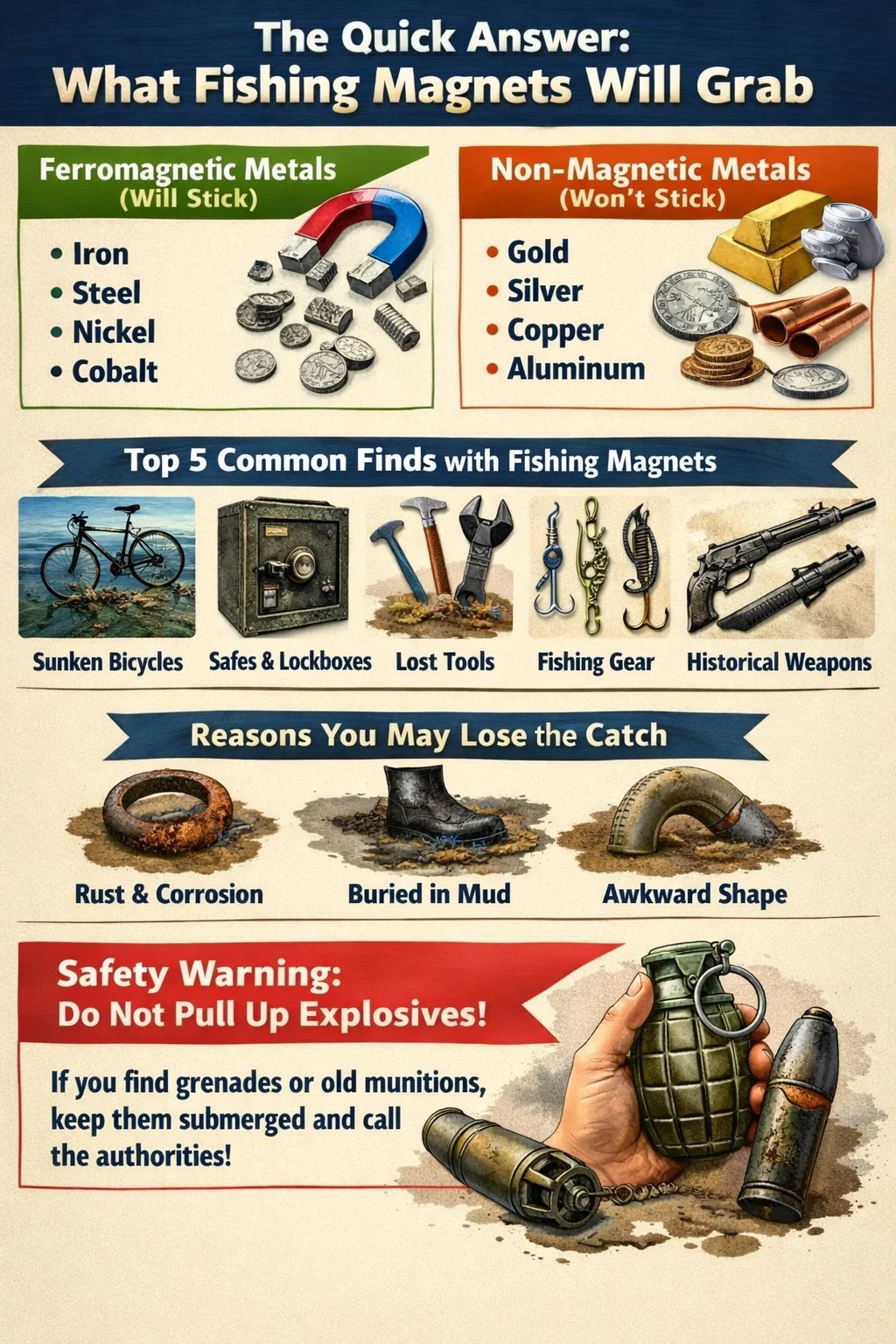
The Quick Answer: What Fishing Magnets Will Grab
Powerful fishing magnets are designed to pick up any ferromagnetic materials, which primarily include iron, steel, nickel, and cobalt. In real-world scenarios, this translates to an endless variety of sunken objects such as bicycles, tools, safes, coins containing steel cores, antique weapons, and industrial scrap. It is essential to understand that they will not pick up non-magnetic metals like pure gold, silver, copper, or aluminum.
Ferromagnetic vs. Non-Magnetic Metals
To maximize your success with magnet fishing, you must know the science behind what sticks. Magnetic pull depends entirely on the atomic structure of the submerged object.
Metals That Stick Like Glue
- Iron: The most common find, often in the form of rusted pipes or old machinery.
- Steel: Found in almost everything from modern tools to bridge components. Carbon steel has a very high magnetic permeability.
- Nickel: Found in some coins and plating, though pure nickel is less common in rivers.
Metals Your Fishing Magnet Will Ignore
Many beginners hope to find gold jewelry or silver bars. Unfortunately, fishing magnets cannot pull these precious metals directly. You might only catch them if they are inside a steel lockbox or attached to a ferrous clasp.
| Non-Magnetic Metal | Common Use | Will it Stick? |
|---|---|---|
| Aluminum | Soda cans, modern road signs | No |
| Copper | Wiring, plumbing pipes | No |
| Brass | Musical instruments, valves | No |
| Lead | Fishing sinkers, old pipes | No |
Top 5 Most Common Finds with Fishing Magnets
When you drop your fishing magnets into a canal or lake, the following items are the most likely candidates to satisfy your curiosity.
Sunken Bicycles and Scooters
In urban areas, thousands of bikes end up in waterways. Because bike frames are often made of steel alloys, they provide a large surface area for fishing magnets to grab. Even modern "aluminum" bikes often have steel bolts, chains, and gears that allow for a partial catch.
Safes and Lockboxes
This is the "Holy Grail" for many enthusiasts. Old safes are typically constructed from heavy-duty iron or steel. While they are often empty, finding one is a testament to the power of high-quality fishing magnets. Note that safes filled with silt can weigh hundreds of pounds, requiring a magnet with at least 1,000 lbs of pull force.
Lost Tools and Hardware
Hammer heads, wrenches, pliers, and screwdrivers are frequently dropped from boats or docks. These are easy to pull up and can often be restored after a vinegar bath to remove the rust.
Fishing Gear and Lures
Ironically, you will find plenty of traditional fishing gear. Steel hooks, wire leaders, and some types of metal spoons will readily stick to fishing magnets.
Historical Artifacts and Weapons
Depending on your location, you might find Civil War relics, old bayonets, or even discarded modern firearms. These items are of high interest but often require reporting to local authorities for safety and legal reasons.
Factors That Affect Your Catch Rate
Just because an item is magnetic doesn't mean your fishing magnets will bring it to the surface. Several environmental factors play a role.
- Rust and Corrosion: A thick layer of oxidation creates a gap between the magnet and the solid metal, significantly reducing the pull strength.
- Silt and Mud: If a heavy object is buried deep in the mud, the suction of the mud might be stronger than the pull of your magnet. You may need to "wiggle" the item loose.
- Surface Shape: A flat steel plate is easy to lift. A round pipe or an irregular object has less contact surface, making it prone to falling off during the retrieval process.
Safety Warning: What You Should NOT Pull Up
While fishing magnets are tools of discovery, they can also find danger. In many parts of Europe and some parts of the US, unexploded ordnance (UXO) like grenades or old mortar shells can be pulled up. These items can still be active and extremely dangerous. If you see something that looks like an explosive, do not touch it, keep it submerged if possible, and call the bomb squad immediately.